
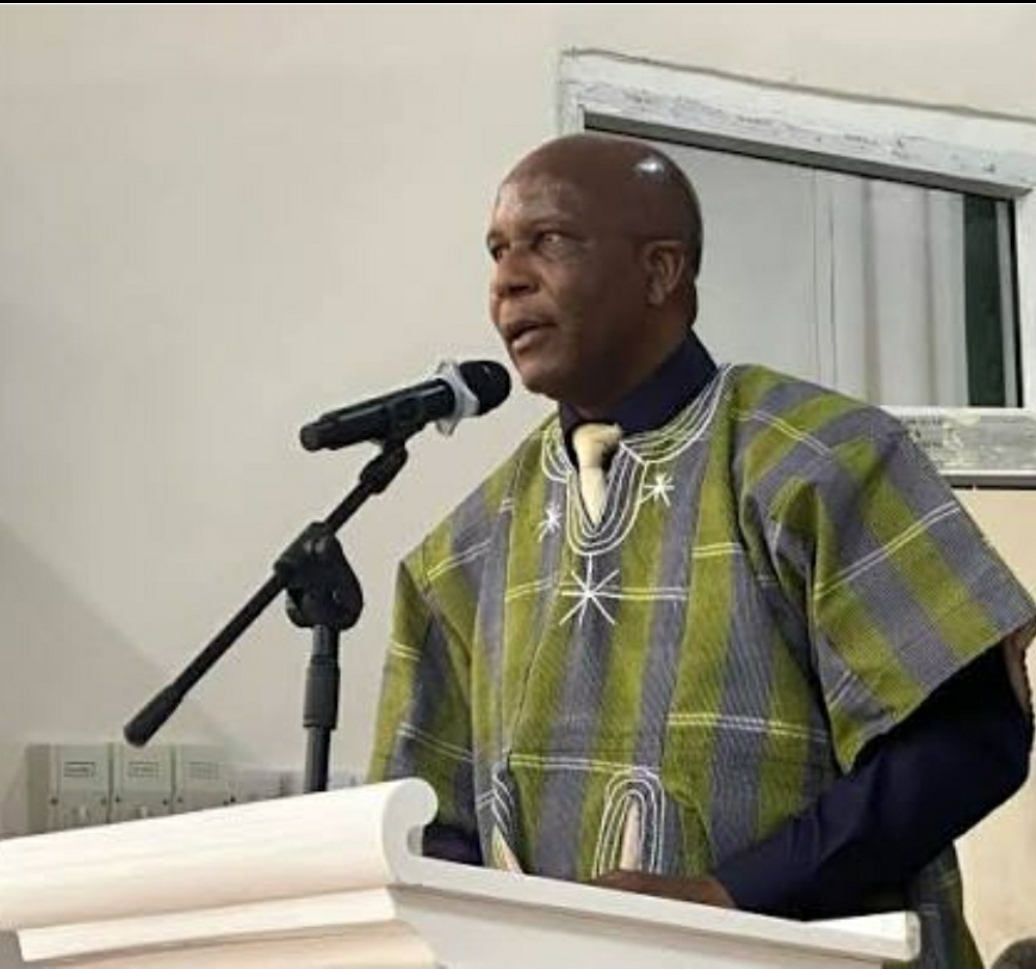
DG DABOH’S NASSIT REVOLUTION
“When Music Is Nice, You Play It Multiple Times”
By Ibrahim Alusine Kamara (Kamalo)
As conversations intensify over the future leadership of the National Social Security and Insurance Trust (NASSIT), a growing number of Sierra Leoneans continue to point to one undeniable reality: under the leadership of Director General Mohamed Fuad Daboh, the institution has witnessed one of the most remarkable transformations in its modern history.
And as many supporters now boldly put it: “When music is nice, you play it multiple times.”
For contributors, pensioners, stakeholders and admirers of institutional continuity, the message is simple — if a leader is producing results, stabilizing an institution and driving reforms, then continuity becomes not just desirable, but necessary.
Supporters argue that Fuad Daboh deserves more time because the revolution currently unfolding at NASSIT is still ongoing, and disrupting that momentum at this critical stage could undermine years of progress.
Unlike ordinary civil servants who are subjected to mandatory retirement regulations, legal observers and governance analysts note that the office of the NASSIT Director General remains a presidential appointment. In essence, Daboh serves at the pleasure, trust and confidence of President Julius Maada Bio, whose constitutional authority empowers him to retain appointees based on performance, competence and national interest.
And according to many observers, Daboh’s performance continues to justify that confidence.
Since assuming office, Daboh has been widely credited with steering NASSIT through an era of restructuring, modernization and renewed institutional confidence. Under his leadership, the Trust has pursued digitization initiatives, strengthened administrative systems, expanded strategic investments and improved service delivery mechanisms aimed at enhancing the welfare of contributors and pensioners.
For many Sierra Leoneans, NASSIT today appears more visible, more responsive and more strategically positioned than it was years ago.
Before Daboh’s stewardship, discussions surrounding NASSIT were often dominated by concerns over inefficiency, delays and institutional inertia. Today, however, many observers say the institution is increasingly evolving into a modern and forward-looking social security body capable of adapting to the realities of a changing economy and growing public expectations.
One of the strongest arguments advanced by supporters is the issue of continuity. Analysts caution that abruptly interrupting leadership at a time when major reforms, investment portfolios and long-term institutional programs are underway could slow progress and create avoidable instability within one of the country’s most important social protection institutions.
Under Daboh, NASSIT has also expanded its footprint in national development conversations while strengthening its role as a critical financial pillar for workers and retirees across Sierra Leone. Supporters insist that maintaining experienced leadership is particularly important at a time when economic pressures continue to mount and public expectations around pension security are growing stronger.
Many contributors and pensioners have equally acknowledged improvements in engagement, communication and institutional responsiveness under the current administration. While acknowledging that no institution is entirely without challenges, there remains a growing public sentiment that Daboh has demonstrated the leadership capacity, institutional memory and reformist mindset needed to consolidate and expand the gains already achieved.
Critics may continue to focus on questions surrounding age and tenure, but supporters insist that leadership should ultimately be measured not by age, but by impact, productivity and results.
And in their view, Fuad Daboh continues to produce measurable progress.
To many within NASSIT and beyond, the conclusion is straightforward: if the reforms are working, if the institution is evolving, if public confidence is improving and if the “music” remains productive and beneficial, then there is every reason for that music to continue playing.
For supporters, Fuad Daboh is not merely occupying office — he is presiding over what they describe as a continuing NASSIT revolution, one they believe still requires time, stability and experienced leadership to fully mature and deliver even greater national impact.