
ANOTHER BANKING COUP!
…SLPP HIJACKS UTB
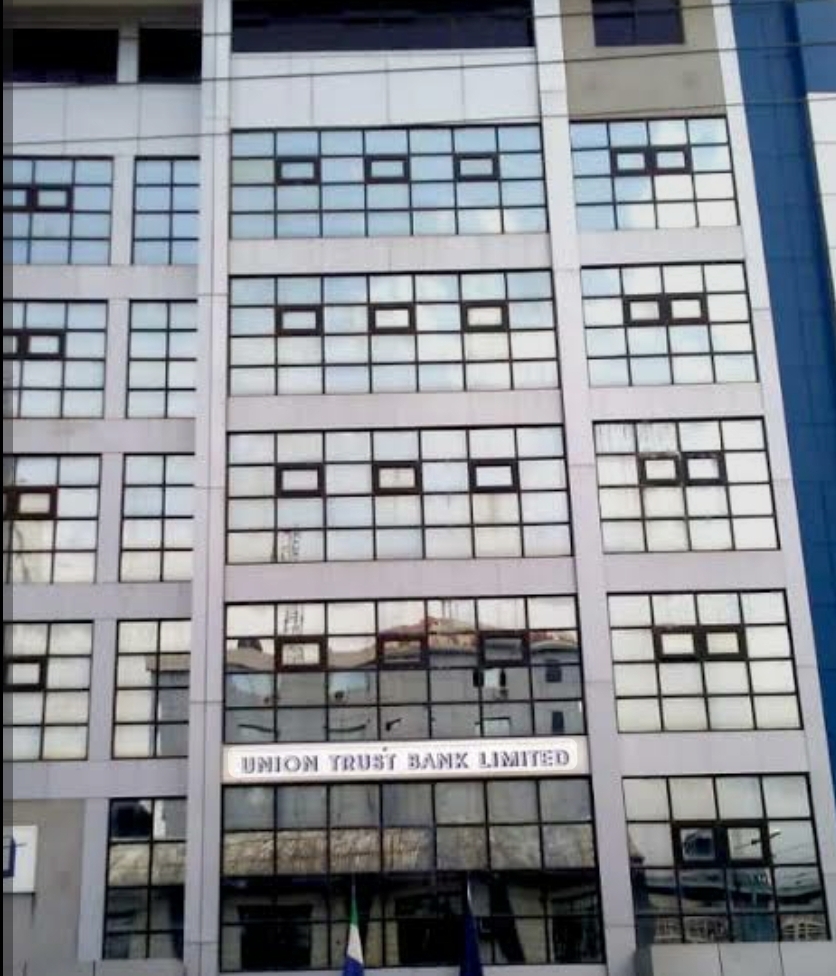
The controversial takeover of the Union Trust Bank (UTB) by the Government of Sierra Leone has reignited concerns within the country’s financial sector, with critics drawing parallels to what they describe as the earlier state-backed takeover of First International Bank.
Many bankers, investors and financial analysts have described the latest development as a disturbing pattern in which privately-owned financial institutions built by Sierra Leonean entrepreneurs are gradually being wrested from their founders and shareholders under the guise of regulatory intervention.
At the centre of the controversy is the late James Sanpha Koroma, widely regarded as one of Sierra Leone’s most accomplished banking pioneers. Together with other prominent Sierra Leoneans, Koroma helped establish Union Trust Bank into one of the country’s leading indigenous financial institutions, creating hundreds of jobs and contributing significantly to national economic development.
However, following his death, shareholders allege that the Bank of Sierra Leone, backed by the Ministry of Finance, moved swiftly to place the institution under caretaker management on grounds that it had not yet met revised capital requirements.
Critics argue that the intervention amounted to a “banking coup,” claiming that the bank was denied the opportunity to fully conclude recapitalisation efforts before regulators stepped in. They point out that the intervention came even before the expiration of timelines associated with meeting capital thresholds that were reportedly linked to broader financial sector reforms encouraged by international partners.
Shareholders maintain that within days of the intervention, they secured a Sierra Leonean investor who provided the capital required to satisfy the recapitalisation requirements and submitted all supporting documentation to the Bank of Sierra Leone. Yet, according to them, those submissions were neither meaningfully acknowledged nor acted upon.
The matter subsequently moved to the courts, where shareholders challenged the legality and procedure surrounding the intervention. However, they now express frustration over what they describe as prolonged delays in obtaining a substantive hearing, raising concerns about access to justice and due process.
Those concerns intensified on Wednesday, June 17, when the Bank of Sierra Leone announced that Rokel Commercial Bank would take over Union Trust Bank through what officials described as a structured arrangement aimed at safeguarding financial stability.
For UTB shareholders, however, the announcement represents the culmination of a process they believe has unfairly deprived them of ownership and control of a profitable institution.
In a strongly worded statement, the shareholders called for transparency, justice and the restoration of the bank to its legitimate owners. They insist that Union Trust Bank remained operationally sound, profitable over the last two financial years and fully capable of addressing its capital challenges through shareholder-led recapitalisation.
The controversy has also revived memories of the government’s handling of First International Bank, with critics questioning whether a troubling precedent is emerging in Sierra Leone’s banking sector. They argue that if indigenous investors can build successful financial institutions only to lose control through administrative actions, confidence in private investment could be severely undermined.
Shareholders are now demanding a formal response to their appeal lodged in December 2025, an independent review of the recapitalisation evidence submitted to regulators, greater transparency in the decision-making process, protection of shareholder rights and the eventual return of Union Trust Bank to its owners and duly constituted management.
As the debate intensifies, many observers say the issue is no longer just about one bank. It is about investor confidence, property rights, regulatory fairness and the future of indigenous participation in Sierra Leone’s financial sector. If confidence in ownership protections is eroded, they warn, the consequences could extend far beyond UTB and affect the broader investment climate of the country.