
$400M ECOWAS EXTRAVAGANZA…
DIPLOMATIC GLORY, DOMESTIC AGONY
By Ibrahim Alusine Kamara (Kamalo)
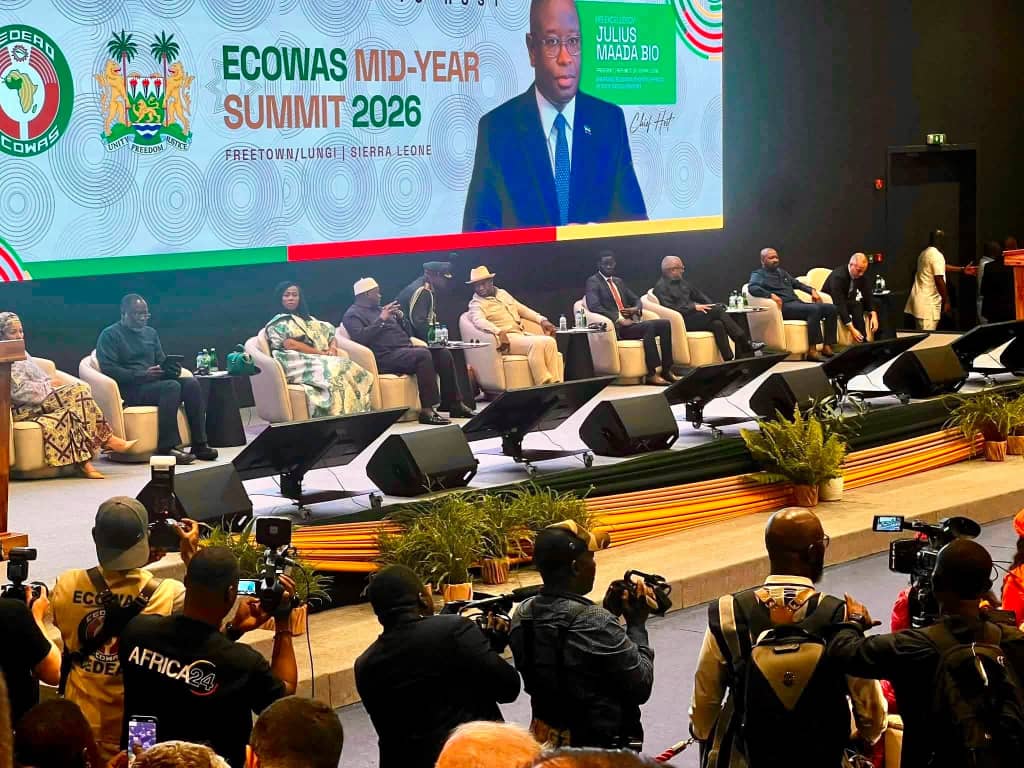
Sierra Leone has become the diplomatic capital of West Africa as Heads of State and Government of the Economic Community of West African States (ECOWAS) converge in Freetown for the Community’s 69th Ordinary Session. The summit has been presented by the government as a historic moment for the country, showcasing Sierra Leone’s growing prominence in regional affairs.
However, beyond the pomp, ceremony and diplomatic speeches lies an uncomfortable national debate over priorities and public spending.
Reports indicate that well over US$400 million has been committed to preparations associated with the summit. The newly constructed ECOWAS Conference Centre in Lungi alone is estimated to have cost about US$124 million, while an additional US$200 million is reportedly budgeted for hosting the event and related logistics. If accurate, these figures represent one of the largest single public investments associated with an international conference in Sierra Leone’s history.
Addressing the opening session, ECOWAS Chairman and Sierra Leone’s President, Dr. Julius Maada Bio, described the newly commissioned Julius Maada Bio Conference Centre and the ECOWAS Logistics Depot as landmark investments for both Sierra Leone and the wider ECOWAS region. According to the President, nations are ultimately remembered not merely for the challenges they overcome but for the enduring institutions they leave behind.
He argued that the Conference Centre is a long-term investment capable of attracting international conferences, boosting tourism, creating employment opportunities and positioning Sierra Leone as a preferred destination for regional and global engagements. Likewise, he described the ECOWAS Logistics Depot as a strategic investment that would strengthen regional security, cooperation and emergency response across West Africa.
These are undoubtedly ambitious aspirations. Yet many Sierra Leoneans remain unconvinced.
For thousands of citizens grappling daily with economic hardship, the summit symbolizes an uncomfortable contradiction between government priorities and the realities of ordinary life. The country continues to battle soaring food prices, high transportation costs, persistent inflation, youth unemployment, inadequate healthcare services, an unreliable electricity supply, and limited access to safe drinking water. Many communities still lack decent roads, while public hospitals struggle with shortages of medicines and equipment.
Against this backdrop, many citizens question whether spending hundreds of millions of dollars on a conference facility and hosting a two-day summit reflects the country’s most urgent development needs.
Critics argue that the same amount could have transformed several sectors simultaneously. Hundreds of schools and hospitals could have been built or rehabilitated. Rural communities could have gained access to clean drinking water. Electricity generation and distribution could have been expanded. More roads linking farming communities to markets could have been constructed. Investments in agriculture could have strengthened food security, reduced import dependence and created employment for thousands of young people.
For many Sierra Leoneans, these would have represented more immediate and tangible legacies than a state-of-the-art conference complex.
Others acknowledge that infrastructure capable of hosting major international events has economic value, but insist that such investments only become meaningful when ordinary citizens can equally experience improvements in their daily lives. A modern conference centre, they argue, cannot substitute for affordable healthcare, quality education, reliable electricity, decent housing or economic opportunities.
The timing of the expenditure has therefore become as contentious as the expenditure itself. With the government repeatedly appealing for fiscal discipline and citizens being asked to endure economic sacrifices, critics say public confidence is naturally tested when projects of such enormous cost are undertaken.
Supporters of the government counter that major infrastructure projects often attract criticism during construction but eventually deliver long-term economic dividends through tourism, foreign investment, hospitality and international recognition. They believe Sierra Leone now possesses a facility capable of hosting continental and global meetings that were previously beyond its reach.
Ultimately, the true measure of the investment will not be determined by ribbon-cutting ceremonies or diplomatic applause. It will be judged by whether the Conference Centre becomes a vibrant economic asset generating sustained revenue, employment and international business, or whether it joins the list of expensive public facilities that remain underutilized while citizens continue to struggle with the basics of everyday life.
As the ECOWAS summit concludes and foreign dignitaries depart, Sierra Leoneans will return to confronting the realities of their daily existence. For many, the enduring question will not be how successful the summit was, but whether the enormous resources devoted to it will ever translate into meaningful improvements in their own lives.