
PANIC GRIPS FUEL CARTEL
…AMINATA & SONS TO KILL DUOPOLY
By Ibrahim Alusine Kamara (Kamalo)
As Parliament continues to debate the proposed concession agreement between the Government of Sierra Leone and Aminata & Sons (SL) Limited, many observers believe the controversy surrounding the agreement extends far beyond the issue of a three-year tax deferment. For them, the real battle is about who controls Sierra Leone’s petroleum sector.
For years, concerns have been raised over what many industry stakeholders describe as a fuel duopoly that has dominated the country’s petroleum market. Critics have long argued that the concentration of market power in the hands of a few players contributed to recurring fuel shortages, artificial scarcity, supply disruptions and instability in the sector.
It is against this backdrop that Aminata & Sons emerged as a major competitor, entering the petroleum industry with significant investments in fuel importation, storage and distribution. Since commencing operations, the company has rapidly established itself as a key player and is widely credited by many consumers and industry observers for helping stabilize fuel supply across the country.
Notably, since the company entered the market, Sierra Leone has not witnessed the prolonged and frequent fuel shortages that once became a recurring national concern. Motorists, businesses and ordinary citizens who previously endured long queues and uncertainty over fuel availability have instead experienced a level of supply stability rarely seen in recent years.
Supporters of the concession agreement argue that this achievement alone should be sufficient reason for Government and Parliament to support the company’s expansion plans.
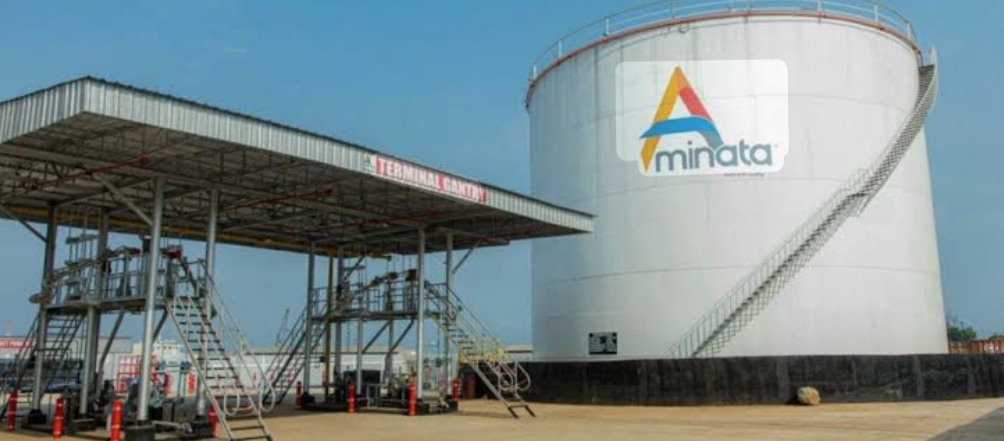
The concession agreement currently before Parliament seeks to grant Aminata & Sons a three-year tax deferment—not a tax waiver—to enable the company to invest heavily in expanding petroleum storage infrastructure and strengthening fuel security.
Supporters insist that critics have deliberately blurred the distinction between a tax deferment and a tax waiver. While a waiver permanently exempts a company from paying certain taxes, a deferment merely postpones payment obligations to allow strategic investments to be undertaken. The taxes remain payable.
According to proponents of the agreement, the expansion of storage facilities would significantly increase national fuel reserves, reduce supply vulnerabilities and create a more competitive market environment.
Many analysts believe that this is precisely where the controversy lies.
The emergence of Aminata & Sons as a strong and financially capable competitor is increasingly being viewed as a direct threat to interests that have historically benefited from limited competition within the petroleum sector. With greater storage capacity and expanded operations, Aminata & Sons would be positioned to compete even more aggressively, potentially weakening the influence of dominant players who have long controlled significant segments of the market.
This perception has fueled growing public speculation regarding the fierce opposition mounted by Deputy Speaker Hon. Ibrahim Tawa Conteh.
While the Deputy Speaker has publicly justified his opposition on concerns about potential revenue implications, many observers remain unconvinced, particularly given that the agreement received unanimous approval from Cabinet after extensive consideration of its economic and legal implications.
The fact that the agreement involves a temporary tax deferment rather than a permanent tax exemption has further intensified questions about the basis of the opposition.
Political commentators and members of the public have increasingly begun asking whether there may be other interests at play. Some have openly speculated that individuals and groups who stand to lose influence and market dominance as a result of increased competition may be uncomfortable with the rapid rise of Aminata & Sons.
Although no evidence has been presented to substantiate claims that the opposition is being influenced by vested interests, the persistence of such speculation reflects the widespread belief that the concession threatens long-standing market arrangements that have benefited a select few.
What remains undeniable, however, is that Aminata & Sons has already demonstrated its capacity to positively impact the sector. The company entered the market promising to tackle fuel scarcity and strengthen supply reliability. By most public assessments, it has largely delivered on that promise.
For many Sierra Leoneans, the debate therefore comes down to a simple question: should Parliament support an investment designed to expand storage capacity, strengthen fuel security and promote greater competition, or should the country risk preserving a system that many believe has historically enabled scarcity, uncertainty and market dominance?
As the ratification process unfolds, supporters of the agreement argue that this is not merely a vote on a concession. It is a vote on whether Sierra Leone is prepared to break the grip of a long-standing fuel duopoly and embrace a more competitive petroleum sector capable of delivering lasting energy security for the nation.