
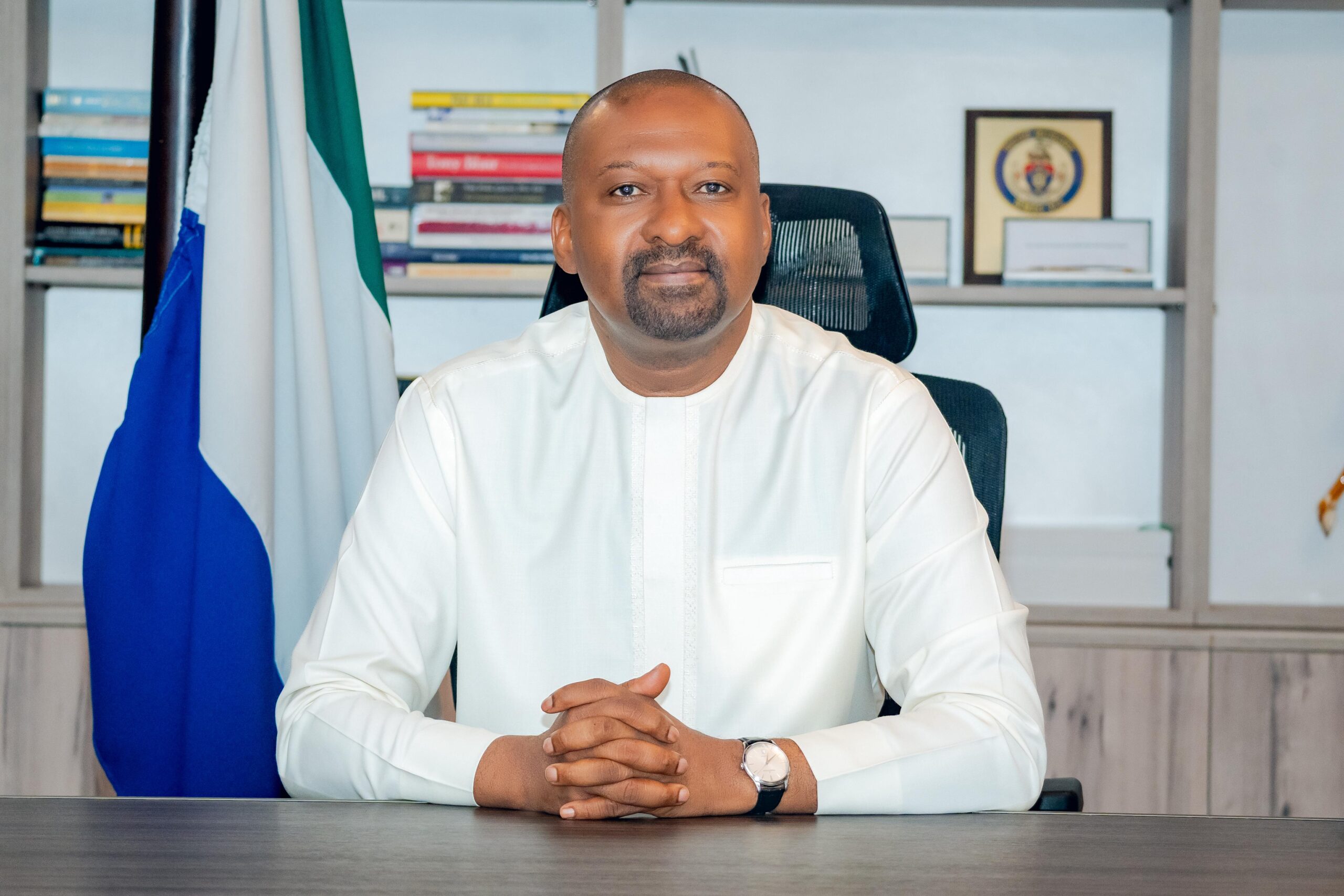
WHY VP JALLOH IS SLPP’S SAFEST SUCCESSOR
As Sierra Leone’s political succession debate gradually intensifies ahead of the 2028 elections, one name continues to surface with increasing consistency inside and outside the ruling Sierra Leone People’s Party (SLPP): Vice President Mohamed Juldeh Jalloh.
While Sierra Leonean politics has traditionally rewarded loud personalities, aggressive rhetoric, and factional mobilization, Juldeh Jalloh’s political rise has followed a markedly different path — one built on restraint, discipline, diplomacy, and quiet political consolidation.
Now, many within the SLPP increasingly believe those qualities could make him the party’s safest and most unifying option heading into the post-Bio era.
President Julius Maada Bio himself has repeatedly elevated the vice president publicly in recent months, praising his loyalty, competence, and ability to work harmoniously within government. During his recent birthday celebration, the president described Juldeh Jalloh as an “exceptional vice president” and highlighted the stability of their relationship — a rare occurrence in Sierra Leone’s political history.
For many political observers, those remarks were not accidental.
Within the SLPP, one of Juldeh Jalloh’s greatest strengths is increasingly seen as his ability to maintain relationships across rival factions inside the party. Unlike several political actors associated with succession politics, the vice president has largely avoided public political wars, internal insults, and factional confrontations.
Party insiders say that approach has allowed him to remain acceptable to multiple camps within the SLPP at a time when internal tensions could become a major threat to party unity after President Bio’s departure.
“He does not create unnecessary enemies,” one senior SLPP member observed privately. “That alone makes him different from many others.”
Observers also note that Juldeh Jalloh possesses a unique political profile that cuts across Sierra Leone’s deeply entrenched regional and ethnic divides.
Born in Kono, raised within the Fulah community, and politically connected across different regions of the country, the vice president is viewed by supporters as someone capable of broadening the SLPP’s appeal beyond its traditional southern and eastern strongholds.
That factor could prove crucial in a fiercely competitive national election where coalition-building and cross-regional appeal may determine victory.
His supporters further argue that his calm and moderate political style makes him more acceptable to undecided voters and even sections of the opposition uncomfortable with increasingly confrontational politics.
Recent comments by veteran APC politician Ibrahim Ben Kargbo suggesting that many opposition supporters would feel comfortable with Juldeh Jalloh as president only deepened that perception.
Analysts say such statements are politically significant in Sierra Leone’s polarized environment, where hostility between the two major political parties often shapes national discourse.
Unlike more divisive political figures, Juldeh Jalloh is rarely associated with inflammatory rhetoric or open political hostility. Supporters say this gives him an advantage as a potential consensus-builder capable of lowering political tensions nationally.
His international exposure is also frequently highlighted by backers.
Before entering frontline Sierra Leonean politics, Juldeh Jalloh worked extensively within the United Nations system, including assignments in conflict and stabilization missions across Africa. Supporters believe that technocratic and diplomatic background gives him broader governance experience and international credibility at a time when Sierra Leone continues to face serious economic and institutional challenges.
Within government, the vice president has developed a reputation as a dependable operator trusted with sensitive national assignments ranging from diplomacy and regional engagements to energy negotiations and governance matters.
Supporters say that quiet efficiency has allowed him to steadily build trust within state institutions without appearing overly ambitious or politically impatient.
Critics, however, argue that Juldeh Jalloh’s biggest weakness may also be his greatest strength.
Some believe his low-profile style lacks the aggressive populist energy often required in modern electoral politics, particularly in the age of social media-driven political mobilization. Others say he needs a stronger grassroots political machine and a more visible public presence if he hopes to dominate a fiercely contested succession race.
Yet his supporters insist Sierra Leone may be entering a political moment where calmness, stability, and moderation are becoming more attractive than confrontation and political drama.
After years of intense polarization, economic hardship, and political tensions, many voters appear increasingly exhausted by conflict-driven politics.
For that reason, growing voices within the SLPP now believe Juldeh Jalloh may represent not just continuity for the ruling party, but also its best chance of presenting a more unifying national figure ahead of 2028.
Whether that growing momentum eventually translates into full political dominance inside the SLPP remains uncertain.
But one thing is becoming increasingly clear: Vice President Juldeh Jalloh is no longer simply a quiet deputy in the shadows of power. For many within the ruling party, he is steadily emerging as the man most capable of holding the SLPP together — and possibly the figure best positioned to carry the party into the next political era.