From Coronation to Humiliation…
JULDEH SOWE IN LEGITIMACY CRISIS
By Ibrahim Alusine Kamara (Kamalo)
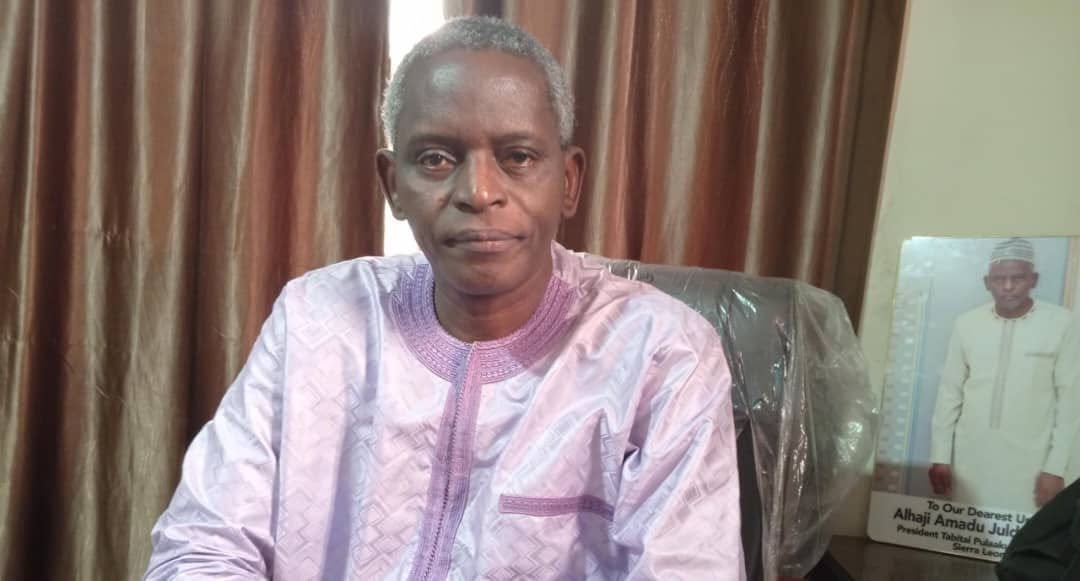
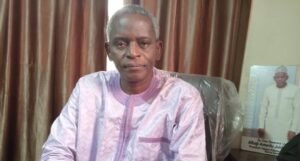
The controversial emergence of Sierra Leonean businessman Alhaji Amadu Juldeh Sowe as President of Tabital Pulaaku International (TPI) has suffered a devastating legal setback following a ruling by a Malian court suspending the decisions, elections and appointments that brought him to the helm of the international Fulani cultural organisation.
The ruling has thrown Sowe’s much-publicised presidency into serious uncertainty, raising fundamental questions about the legitimacy of the disputed September 2026 General Assembly in Banjul, The Gambia, where he was purportedly elected to lead the organisation.
What was celebrated by his supporters as a historic leadership achievement has now become the subject of a bitter international legal confrontation, with the Malian judiciary intervening to halt the implementation of decisions arising from the contested electoral process.
According to reports emerging from Bamako, the High Court of Commune IV suspended all resolutions, elections and appointments emanating from the Banjul gathering, effectively stripping the disputed assembly’s decisions of their immediate legal effect pending further judicial proceedings.
Crucially, the court reportedly prohibited beneficiaries of those suspended decisions from presenting themselves as legitimate representatives of Tabital Pulaaku International on the strength of the contested resolutions.
The implication is particularly significant for Sowe, whose claim to the organisation’s presidency rests on the very electoral process now suspended by the court.
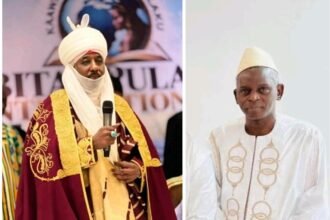
The judicial intervention represents a major victory for the faction associated with Nigeria’s influential Emir of Kano, Muhammadu Sanusi II, whose leadership challenged the legitimacy of the Banjul assembly and questioned the authority under which the controversial election was conducted.
The Sanusi-led executive has maintained that the disputed gathering lacked the necessary constitutional legitimacy to elect a new international leadership, insisting that the organisation’s established governance procedures must be respected.
The dispute has consequently exposed deep divisions within Tabital Pulaaku International, an organisation established to promote Fulani cultural identity, unity, heritage and cooperation across national boundaries.
Rather than ushering in a peaceful leadership transition, the Banjul election has plunged the organisation into an increasingly embarrassing struggle for authority, with rival camps laying competing claims to its leadership.
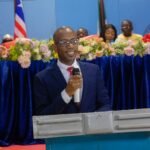
For Sowe, the development is especially damaging because his election was followed by a high-profile inauguration in Freetown, where his emergence as international president was publicly celebrated.
However, the Malian court’s intervention has now cast a long shadow over those celebrations, leaving serious questions about whether the process that produced his presidency complied with the organisation’s governing rules.
The controversy also raises troubling concerns about the circumstances under which an international cultural organisation could conduct a disputed leadership election despite objections from its existing executive.
Observers are now questioning whether sufficient consultations, constitutional safeguards and consensus-building measures were undertaken before the Banjul assembly proceeded with its controversial decisions.
The ruling has further intensified scrutiny of the individuals responsible for organising the assembly and the legal authority they relied upon in declaring a new international executive.
In a statement reportedly issued on 9 November 2026, the Secretary-General of the Sanusi-led executive, Lamido Issa Bi Amadou, welcomed the judicial development and maintained that the existing leadership remained responsible for managing the organisation’s affairs until a legitimate succession process was concluded.
Although Sowe’s supporters have reportedly questioned the implications of a Malian court ruling for an election conducted in The Gambia, the suspension nevertheless presents a formidable legal obstacle to his continued assertion of presidential authority under the contested Banjul resolutions.
The development is particularly embarrassing for those who had portrayed the election as a settled matter and Sowe’s leadership as an accomplished fact, despite the unresolved objections surrounding the process.
With the substantive dispute reportedly scheduled for further hearing on 21 December 2026, the battle over Tabital Pulaaku International’s leadership appears far from over.
The court’s intervention has not finally determined who should lead the organisation, but it has dealt a serious blow to the legal foundation of Sowe’s disputed election and strengthened the position of those challenging his claim.
As the international Fulani community awaits the next stage of the proceedings, attention is increasingly shifting towards whether the organisation can restore constitutional order, reconcile its divided leadership and conduct an electoral process capable of commanding broad legitimacy.
For now, the central question remains unavoidable: How can Alhaji Amadu Juldeh Sowe continue to claim an uncontested international presidency when the very decisions that produced his election have been suspended by a court of law?
The answer may ultimately determine not only Sowe’s political fortunes within Tabital Pulaaku International but also the credibility and future unity of the organisation itself.