
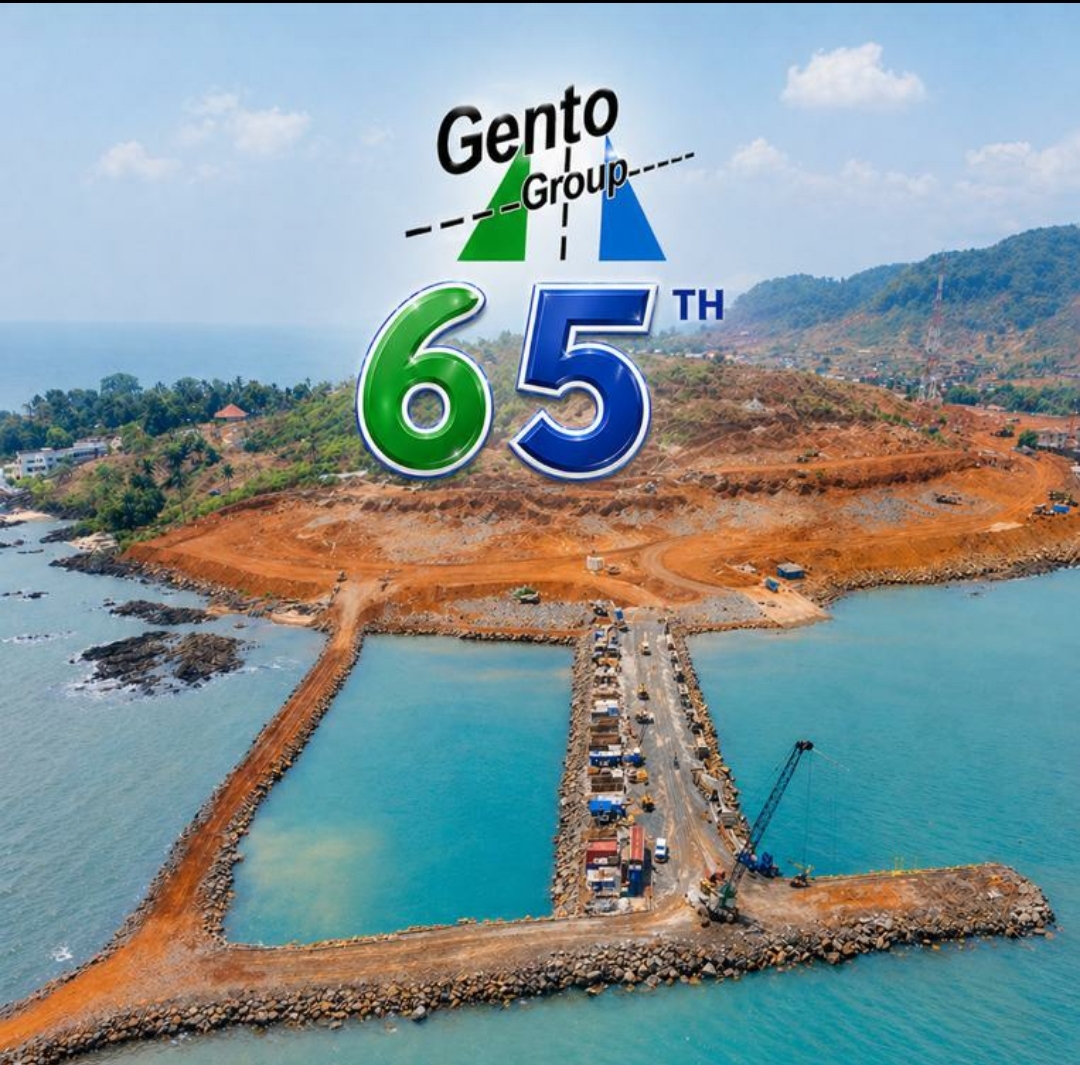
KENT PORT:
PRESIDENT BIO’S MAKE-OR-BREAK LEGACY
Growing calls are intensifying across Sierra Leone for President Julius Maada Bio to fully embrace and actively support the ambitious Kent Port Project spearheaded by the Gento Group, a venture widely described as a transformative milestone capable of reshaping the nation’s economic future.
Observers, business leaders, and community voices alike argue that the project presents a rare and historic opportunity for the Bio administration to leave behind a powerful and enduring legacy. At a time when Sierra Leoneans are increasingly seeking tangible economic progress and employment opportunities, the Kent Port initiative is being hailed as a beacon of hope—one that could unlock industrial growth, expand trade, and generate thousands of jobs.
The Gento Group’s bold move to initiate the Kent Port Project, largely driven by private sector ambition, has been described as unprecedented in Sierra Leone’s modern economic history. Many analysts note that such a venture, undertaken by a Sierra Leonean businessman, underscores the untapped potential within the country’s entrepreneurial class. However, they stress that without decisive government backing—particularly financial support—the full impact of the project may not be realized.
Advocates emphasize that timely intervention by the government would not only accelerate construction but also send a strong signal to international investors that Sierra Leone is serious about fostering a conducive investment climate. “Government participation in a project of this magnitude builds confidence,” one economic commentator noted. “It reassures both local and foreign investors that strategic national projects are protected, prioritized, and supported at the highest level.”
The Kent Port Project is increasingly being framed as more than just an infrastructure development; it is seen as a potential “breadbasket” for economic transformation. By enhancing maritime trade capacity, reducing logistical bottlenecks, and creating a hub for commerce, the port could stimulate multiple sectors, from agriculture and manufacturing to tourism and logistics.
The urgency surrounding the project is further amplified by widespread unemployment concerns. Many Sierra Leoneans view the port as a critical avenue for job creation, particularly for the country’s growing youth population. From construction phases to long-term port operations, the project is expected to generate a wide range of employment opportunities, offering both skilled and unskilled workers a pathway to economic stability.
In his recent Independence Day address, President Bio reflected on the nation’s journey since 1961, noting that “Sierra Leone started building in 1961 and is still building.” Supporters of the Kent initiative argue that the project perfectly aligns with this vision of continuous national development. They contend that the President now has a unique chance to translate those words into a landmark achievement that will stand as a symbol of progress for generations.
Significantly, the legal and policy framework for the Kent Port Project has already received institutional backing, with the relevant instrument enacted in Parliament and endorsed by the President’s cabinet. This, proponents argue, places the Bio administration in a favorable position to fully champion the project without bureaucratic delay.
Many believe that President Bio should take pride in the fact that such a major undertaking is unfolding during his tenure. By stepping forward with financial support and visible political backing, he could cement his reputation as a leader who not only encouraged private sector innovation but also ensured its success.
“There are moments in leadership that define history,” a civil society representative remarked. “This is one of those moments. Supporting the Kent Port Project could become the crown jewel of President Bio’s legacy.”
As anticipation continues to build, stakeholders are urging swift action. With the right blend of political will, financial commitment, and strategic coordination, the Kent Port Project could mark a turning point in Sierra Leone’s economic trajectory—one that firmly places the nation on a path toward sustainable growth and prosperity.