
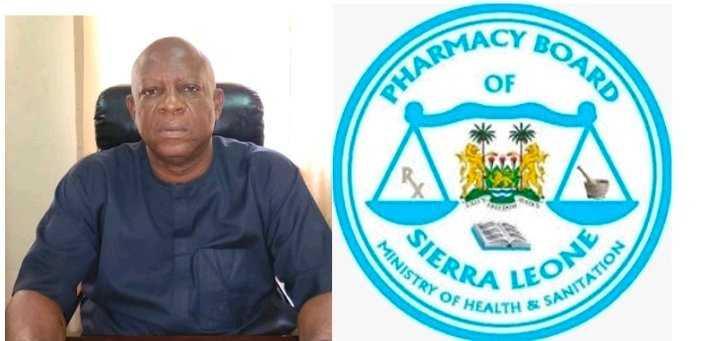
DANGEROUS DRUGS, WEAK OVERSIGHT!
…Pharmacy Board Under Fire
Questions continue to mount over the effectiveness of the Pharmacy Board of Sierra Leone (PBSL) in safeguarding public health, as concerns surrounding the importation, distribution and sale of counterfeit, substandard and unregistered medicines continue to expose possible weaknesses in the country’s pharmaceutical regulatory system.
At the centre of the growing controversy is the apparent inability of the regulatory authorities to convincingly demonstrate that every medicine entering Sierra Leone’s pharmaceutical supply chain has undergone the necessary registration, inspection, verification and quality assurance procedures before reaching unsuspecting consumers.
For an institution entrusted with protecting millions of Sierra Leoneans from potentially dangerous pharmaceutical products, the Pharmacy Board now faces increasingly uncomfortable questions about its regulatory vigilance, enforcement mechanisms and accountability.
Investigations being pursued by Salone Compass Newspaper have raised concerns about the processes through which medicines are imported, cleared at the country’s entry points, distributed to wholesalers and retailers, and eventually sold to patients in pharmacies, hospitals and other healthcare facilities.
These concerns have become particularly troubling against the backdrop of persistent complaints about medicines allegedly failing to produce the expected therapeutic results, raising fears that some patients may be purchasing products whose quality, safety or effectiveness has not been adequately established.
Although ineffective treatment can result from several factors, including incorrect diagnosis, inappropriate prescriptions, antimicrobial resistance and poor adherence to treatment, the possibility of substandard or falsified medicines circulating within the healthcare system demands urgent regulatory attention.
The fundamental question remains: Who is protecting Sierra Leoneans from dangerous medicines, and how effectively is that responsibility being discharged?
The Pharmacy Board, as the institution responsible for pharmaceutical regulation, is expected to ensure that medicines entering the country meet applicable quality, safety and registration requirements.
Its regulatory responsibilities make it a critical safeguard against the circulation of counterfeit, falsified, substandard and unauthorised pharmaceutical products.
However, concerns surrounding the availability of potentially noncompliant medicines have prompted questions about whether the Board’s existing inspection, monitoring and enforcement arrangements are sufficiently robust to prevent regulatory breaches.
Of particular concern is whether pharmaceutical importers consistently comply with registration and importation requirements, whether consignments undergo appropriate verification before clearance, and whether effective post-market surveillance is conducted after medicines enter commercial distribution.
These are not merely administrative concerns. They go directly to the protection of human life.
A patient who purchases a medicine from a licensed pharmacy reasonably expects that the product has satisfied the country’s regulatory requirements. When that expectation is undermined, public confidence in the entire healthcare system is placed at risk.
The situation has attracted additional attention following recent interventions by the Parliamentary Committee on Health and the Pharmacy Board concerning the importation and distribution of medicines.
Reports emerging from parliamentary scrutiny have raised concerns about pharmaceutical importers and possible breaches of regulatory requirements.
Among businesses whose activities have attracted scrutiny in the broader pharmaceutical sector are People’s Pharmacy, Mark Pharmacy, Hamdalaye Pharmacy and Leigh Pharmaceuticals.
However, the inclusion of these businesses in regulatory discussions or investigations does not, by itself, establish that they have imported, distributed or sold counterfeit or substandard medicines. Any specific allegation requires supporting evidence and an opportunity for the affected business to respond.
What remains particularly significant is the wider question of how regulatory noncompliance, where established, could occur within a system specifically designed to prevent it.
If medicines are imported without the required authorisation, who is responsible for detecting such violations?
If pharmaceutical products enter the country without adequate verification, which institution is expected to intervene?
And if potentially dangerous medicines are subsequently discovered on pharmacy shelves, what enforcement measures are available to identify those responsible, remove the products from circulation and protect consumers?
These questions place the Pharmacy Board’s oversight responsibilities under intense scrutiny.
The recent joint crackdown involving the Pharmacy Board and Parliament’s Committee on Health, while potentially an important enforcement intervention, has also highlighted the need to establish whether existing preventive controls have been consistently applied.
Indeed, the effectiveness of pharmaceutical regulation should not be measured solely by the number of inspections conducted or businesses sanctioned after suspected violations emerge.
It should equally be measured by the capacity of the regulatory system to prevent unsafe or unauthorised medicines from reaching consumers in the first place.
This distinction is particularly important in a country where many citizens already face significant challenges accessing quality healthcare and purchasing prescribed medicines.
For low-income households, spending scarce resources on ineffective or unsafe medication can have devastating consequences, including delayed treatment, worsening illness and additional financial hardship.
The World Health Organization has repeatedly identified substandard and falsified medical products as a serious global public health threat, particularly in countries where regulatory capacity and pharmaceutical supply-chain monitoring face significant challenges.
Sierra Leone cannot afford to underestimate such risks.
The growing controversy also raises questions about the relationship between pharmaceutical regulators, importers, wholesalers and retail pharmacies.
Effective regulation requires clear institutional boundaries, transparent decision-making and consistent enforcement of applicable laws, irrespective of the commercial influence or market position of individual pharmaceutical operators.
Where regulatory officials fail to enforce established standards, the resulting weaknesses may create opportunities for unscrupulous operators to exploit the system.
However, determining whether any such failure results from inadequate resources, weak administrative systems, negligence or deliberate misconduct requires credible evidence and independent investigation.
It would therefore be premature to conclude that particular regulatory officials are complicit in pharmaceutical wrongdoing without establishing their actions, responsibilities and any relevant evidence.
Nevertheless, the Pharmacy Board owes the public a comprehensive explanation of the safeguards currently in place to ensure that medicines imported into Sierra Leone meet the required standards.
Such an explanation should address the registration and authorisation of imported medicines, verification of pharmaceutical consignments, laboratory testing arrangements, inspections of distribution facilities and enforcement action against confirmed violations.
Equally important is the need for greater transparency concerning medicines that have been rejected, recalled, seized or otherwise found to violate regulatory requirements.
Public confidence cannot be restored through assurances alone. It must be supported by verifiable regulatory action and accessible information.
Parliament’s Committee on Health also has a significant responsibility to ensure that concerns raised during its oversight activities are thoroughly examined and that any established violations are addressed through the appropriate legal and administrative processes.
Where evidence reveals systemic weaknesses, Parliament should consider whether additional resources, stronger enforcement mechanisms or legislative reforms are required to strengthen pharmaceutical oversight.
Where evidence points to misconduct by individual officials or pharmaceutical operators, the appropriate investigative and prosecutorial authorities should be allowed to act without interference.
For its part, the Ministry of Health must ensure that pharmaceutical safety remains a central component of national healthcare policy.
The consequences of regulatory failure in this sector extend far beyond financial losses or administrative embarrassment.
They potentially affect the lives of patients who depend on medicines to treat malaria, infections, hypertension, diabetes and other serious health conditions.
A compromised pharmaceutical supply chain can undermine even the most ambitious national healthcare programmes.
As Salone Compass Newspaper continues its investigation, attention will increasingly focus on the accountability mechanisms governing pharmaceutical imports and the effectiveness of regulatory supervision across the country’s medicine distribution network.
The investigation will also seek to establish whether identified regulatory concerns have been followed by meaningful corrective action and whether the institutions responsible for protecting consumers are adequately fulfilling their mandates.
For now, one question continues to overshadow the controversy: If the Pharmacy Board cannot convincingly demonstrate that medicines reaching the public are properly regulated, how can ordinary Sierra Leoneans be assured that the drugs they purchase are safe and effective?
Until these concerns are comprehensively addressed, questions about the integrity of Sierra Leone’s pharmaceutical regulatory system are unlikely to disappear.
The health and safety of the nation must take precedence over commercial interests, institutional defensiveness and regulatory complacency.
In part three of this ongoing series, we look at those who clear the Medicines Entering Sierra Leone, and if there are Regulatory Safeguards?