
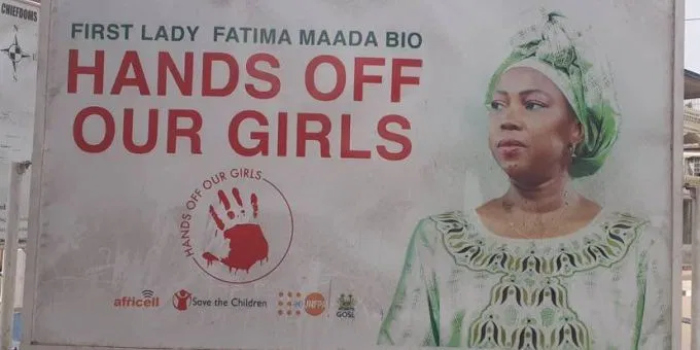
The 2025 Crime Report of the Sierra Leone Police (SLP) has revealed a deeply troubling picture of crime trends across Sierra Leone, with sexual violence against children emerging as one of the most disturbing realities confronting the nation. According to the report, nearly 2,000 cases of sexual penetration involving children were recorded across the country in 2025. Specifically, the SLP’s Family Support Unit (FSU) documented 1,946 cases, marking a sharp increase from the 1,520 cases reported in 2024. The figures represent not merely statistics but the suffering of thousands of vulnerable minors whose safety has been shattered.Overall, the report recorded 34,066 criminal and road traffic offences in 2025. Criminal offences were heavily concentrated in urban and semi-urban areas, with the Western Area accounting for about 59 percent of all cases reported nationwide. Within the capital region, Freetown East recorded 11,603 offences, while Freetown West reported 8,487 cases, making them the most crime-affected jurisdictions in the country.Perhaps, most alarming is that offences against women and children constituted the largest share of all reported crimes. A total of 15,188 cases, representing 44.6 percent of the national crime tally, fell under this category. This indicates that the most vulnerable members of society are the most exposed to violence.The spike in sexual penetration cases involving children is particularly disturbing within the socio-economic realities of Sierra Leone. In a country where poverty, overcrowding, and weak social protection systems already place immense strain on families, such crimes compound the vulnerability of children who often lack the means to seek protection or justice.Many victims come from communities where poverty forces families into cramped living conditions, sometimes sharing small spaces with extended relatives or tenants. In such environments, opportunistic abuse becomes easier to conceal, and the power imbalance between adults and minors often silences victims.The consequences are devastating. Beyond the immediate physical trauma, child sexual abuse carries lifelong psychological scars, including depression, anxiety, social withdrawal, and disrupted education. In extreme cases, victims face early pregnancy, health complications, and long-term social stigma, all of which deepen the cycle of poverty already gripping many communities, making the situation a growing national emergency.The figures also expose a troubling gap between reported crimes and prosecutions. Of the 1,946 cases investigated by the Family Support Unit, only 133 were charged to court, while 138 were referred to the Directorate of Public Prosecutions. Five cases were closed and 83 were kept in view, but the overwhelming majority of 1,587 cases remain under investigation.Police authorities say the backlog reflects the sensitive and complex nature of sexual offences involving children, which often require medical evidence, psychological assessments, and careful handling of traumatised victims. Yet for many observers, the numbers highlight a justice system struggling under the weight of growing caseloads.In many communities, delays in prosecution can discourage victims’ families from pursuing justice. Economic hardship sometimes leads families to accept informal settlements or quiet compromises, allowing perpetrators to escape full accountability and perpetuating a dangerous culture of impunity.Beyond the individual tragedies, the rising tide of child sexual abuse poses a grave threat to Sierra Leone’s future. Children represent the country’s most valuable resource—its next generation of workers, thinkers, and leaders. When their bodies and minds are violated, the damage extends far beyond the victims themselves.A society that fails to protect its children risks normalising violence, eroding trust in institutions, and perpetuating generational trauma. The long-term social cost includes increased mental health burdens, higher dropout rates in schools, and communities trapped in cycles of neglect and abuse.There is an urgent need for collective action as addressing the crisis requires more than policing alone. Experts say a comprehensive response must include stronger community vigilance, improved child protection systems, expanded victim support services, and faster prosecution of offenders.Parents, teachers, community leaders, and religious institutions must all play a role in identifying early warning signs and ensuring children are not left unprotected. Equally critical is the need for public awareness campaigns that encourage victims to report abuse and reassure families that justice mechanisms exist to support them.Ultimately, the figures in the 2025 crime report serve as a sobering reminder: the fight against sexual violence, particularly against children, is not just a law-enforcement challenge—it is a national moral test. How Sierra Leone responds will determine whether its most vulnerable citizens remain trapped in silence or finally receive the protection and justice they deserve.Sadly, the disturbing surge in child sexual abuse cases is occurring despite the much-publicised “Hands Off Our Girls” campaign, spearheaded by Sierra Leone’s First Lady, Fatima Maada Bio.Launched with considerable fanfare, the Hands Off Our Girls initiative was intended to confront the scourge of rape and sexual violence against women and children across Sierra Leone. The campaign sought to mobilise public awareness, encourage reporting of abuse, and strengthen the protection of girls through advocacy, education, and legal reforms.Yet the figures emerging from the 2025 Crime Report of the Sierra Leone Police present a stark and uncomfortable contradiction. While the campaign has succeeded in elevating the conversation around gender-based violence, the reality on the ground suggests that the epidemic it seeks to combat remains stubbornly entrenched.If anything, the rise to 1,946 cases of sexual penetration involving children raises difficult questions about whether awareness campaigns alone are sufficient to stem a crisis rooted in deep structural problems—poverty, weak enforcement mechanisms, slow judicial processes, and entrenched cultural silence surrounding sexual abuse.In many impoverished communities, the vulnerability of children is intensified by economic desperation. Families struggling to survive may lack the means to pursue legal action, while some perpetrators exploit positions of authority within households or neighbourhoods. In such conditions, public campaigns, however noble in intent, risk becoming symbolic gestures if not matched by robust enforcement and social protection systems.Moreover, the gap between reported cases and prosecutions underscores another challenge. With only a fraction of cases reaching the courts, the perception that offenders can evade justice continues to undermine deterrence. Without swift investigations, effective prosecutions, and visible convictions, the message to predators remains dangerously ambiguous.The paradox, therefore, is striking: at a time when the country has one of the most visible anti-rape advocacy campaigns in its history, the statistics suggest the crisis has not abated. For critics, this highlights the difference between public advocacy and measurable institutional impact.Ultimately, campaigns such as Hands Off Our Girls can only achieve their promise if they move beyond slogans and rallies to produce systemic change—strengthening the capacity of the Family Support Unit of the police, accelerating prosecutions through the courts, expanding victim support services, and tackling the poverty conditions that make children so vulnerable in the first place.Until then, the grim numbers in the crime report will continue to serve as a painful reminder that the protection of Sierra Leone’s children cannot depend on advocacy alone; it must be anchored in justice, accountability, and social reform.