
By Ibrahim Alusine Kamara (Kamalo)
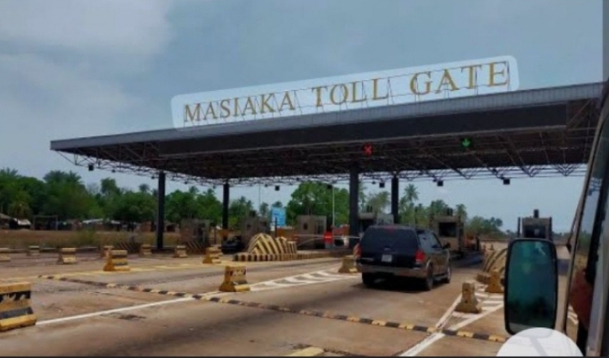
Sierra Leoneans have been jolted by fresh revelations that the four-lane Wellington–Masiaka highway, once celebrated as a flagship infrastructure achievement, has failed to deliver the expected benefits to the nation nearly a decade after the commencement of its operations.Constructed and operated under a Build-Operate-Transfer (BOT) arrangement between the Government of Sierra Leone and China Railway Seventh Group (CRSG), the highway is governed by a 27-year concession financed through a tolling system. At the time, the project was presented as a strategic intervention to stimulate economic recovery, improve transport efficiency, and generate steady revenue for the state. Today, those promises ring hollow. A recent report by the Institute for Governance Reform (IGR) has placed the Wellington–Masiaka toll road under intense scrutiny, describing it as one of the most glaring examples of failed public-private partnerships in Sierra Leone’s recent history.The figures contained in the report are staggering. According to IGR, the tolling system has generated approximately US$172 million in revenue over the nine years since the road became operational. Yet, shockingly, the Government of Sierra Leone has reportedly received only about US$1 million from this sum on behalf of its citizens.This yawning gap between revenue generated and revenue received raises serious questions about contractual fairness, transparency, and accountability in the management of the toll road. For many Sierra Leoneans, who pay toll fees daily while grappling with rising fuel prices, inflation, and unemployment, the revelation feels like a betrayal.The IGR report paints a troubling picture of a state that appears sidelined in a project built on its own land, using its own sovereign authority, and funded ultimately by its people. If accurate, the findings suggest that the toll road functions more as a private cash cow than a national asset.Beyond the numbers, the report reignites a broader national debate: Who truly benefits from large-scale infrastructure projects in Sierra Leone?Governance experts argue that the Wellington–Masiaka case exposes systemic weaknesses in how concession agreements are negotiated, monitored, and enforced. Poor oversight, weak regulatory institutions, and opaque contract terms have long left the state vulnerable in dealings with powerful foreign contractors.Critics have squarely blamed the SLPP government of President Julius Maada Bio, accusing it of failing to exercise due diligence and effective supervision over the Chinese-controlled toll operation. For them, this outcome did not occur in a vacuum. It is seen as the predictable consequence of institutional neglect, and, more damningly, allegations of entrenched corruption, including claims that politically exposed persons may have demanded “brown envelopes” from CRSG officials in exchange for silence or favorable treatment.While such allegations remain unproven, their persistence underscores a dangerous erosion of public trust.The implications are profound. At a time when Sierra Leone is burdened by debt and struggling to finance basic social services, losing access to tens, or even hundreds, of millions of dollars in potential public revenue is nothing short of catastrophic.Governance advocates insist that the moment calls for decisive action. Sierra Leone must revisit unprofitable and lopsided concession agreements, publish toll revenue data, strengthen independent audits, and enforce anti-corruption safeguards. Above all, the state must reassert its authority to ensure that public infrastructure serves the common good, not a narrow circle of foreign firms and domestic elites.The Wellington–Masiaka highway was meant to be a road to national progress. Instead, it now risks standing as a concrete symbol of how poor governance, secrecy, and alleged corruption can derail even the most promising development projects.For a country seeking economic justice and inclusive growth, the unanswered questions surrounding this toll road can no longer be ignored.