
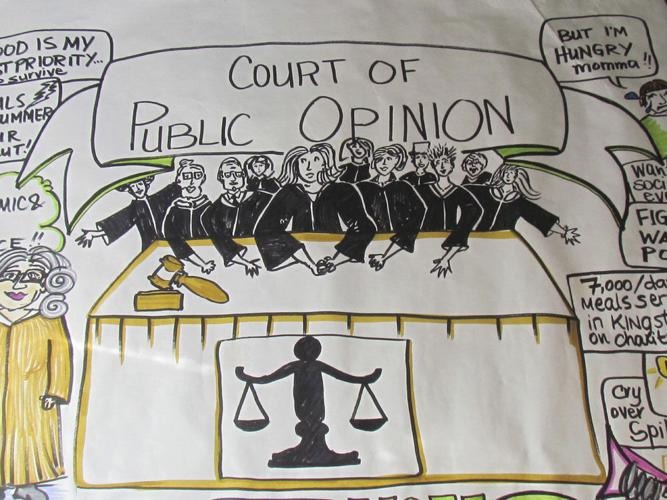
Charge: Gross negligence, abdication of responsibility, and endangerment of public health in the City of Freetown. The Evidence Before the Court: Human corpses—unclaimed, unattended, and undignified—left on the streets of the nation’s capital. Not once. Not twice. Repeatedly. In full public view.The court notes that when the Freetown City Council (FCC) stepped in to collect abandoned bodies, it was performing not a political act, but a humanitarian and sanitation duty. The disclosure that 220 corpses were collected within ten months was disturbing, yes, but truth is often disturbing. The figures were not invented; the bodies were real.Yet instead of confronting the crisis, the Ministry of Local Government chose to interrogate the messenger. Public Verdict on the Ministry of Local Government: Guilty of prioritizing image management over human life.Guilty of obstructing an emergency response without providing an alternative.Guilty of silence after sabotage.The court finds it unconscionable that a Ministry tasked with oversight and coordination would question who spoke rather than why people are dying and being dumped like refuse. By effectively halting FCC’s intervention and then retreating into inertia, the Ministry left Freetown exposed to disease, trauma, and moral decay. Public Verdict on Governance: When a city must choose between collecting corpses and seeking permission, governance has failed. When ministries fear bad headlines more than bad outcomes, leadership has lost its moral compass. Public Sentencing (Non-Custodial but Binding): Immediate resumption of coordinated corpse collection across Freetown. Clear designation of institutional responsibility—no blame-shifting. A public explanation to citizens, not bureaucratic letters behind closed doors. Urgent action on the root causes, including substance abuse and urban poverty. Final Observation of the Court: Dead bodies on the streets are not a public relations problem; they are a national disgrace. Silence is not neutrality, it is complicity. Freetownians rest their case.