

ECF $78.8M…
Lifeline… or Another Rip-Off?
By Ibrahim Alusine Kamara (Kamalo)
Amid the long-running “Tork N Do” narrative touted by President Julius Maada Bio’s government, a recent World Bank report delivers a scathing reality check, highlighting persistent economic mismanagement and weak governance over his more than seven-year tenure.
The Report No. 206217, titled “Enabling the Private Sector for Growth and Job Creation”, provides an updated economic assessment of Sierra Leone. It outlines a grim picture of the country’s economic landscape, exposing significant shortfalls in fiscal discipline, private sector development, and job creation under the ruling SLPP government.
According to the report, Sierra Leone’s economy has remained “perpetually overwhelmed” by complex domestic and global challenges for four consecutive years, undermining both growth and macroeconomic stability. While inflation pressures have eased and the currency has shown signs of stabilization, the report warns that external buffers have depleted, rendering the economy increasingly vulnerable to external shocks.
Fiscal indiscipline — marked by persistent deficits over budget targets — has continued to erode policy credibility and debt sustainability. Meanwhile, the lack of a strong, competitive private sector has stalled job creation and economic inclusivity.
The report identifies multiple structural bottlenecks: poor access to finance, land, and electricity; weak human capital; and an inefficient regulatory environment. These challenges are compounded by chronic macroeconomic instability and an underdeveloped trade and competition framework. The Bank further notes weak public financial management systems, which it says are a “cross-cutting constraint” to policy credibility, fiscal oversight, and governance.
Another critical observation is the continued fiscal dominance of monetary policy, meaning the government’s borrowing needs overshadow sound economic management. The “banking-sovereign nexus,” where banks heavily fund government deficits instead of private sector investment, continues to suppress credit availability and increase systemic risk.
Despite these concerns, the World Bank projects a modest recovery: economic growth is expected to reach 4.3% in 2025 and 4.6% by 2027. This recovery, however, hinges on improved agricultural productivity, mining sector expansion, and resilience in the service sector.
The report underscores the urgency of scaling up the Feed Salone initiative, strengthening private sector-led agricultural value chains, and bolstering export diversification — all key to addressing food insecurity and youth unemployment.
In summary, the World Bank’s findings are a direct rebuke to the government’s public relations posture. While the administration continues to champion its “Tork N Do” mantra, the data reveals a country still grappling with economic fragility, administrative inertia, and missed opportunities for inclusive growth.
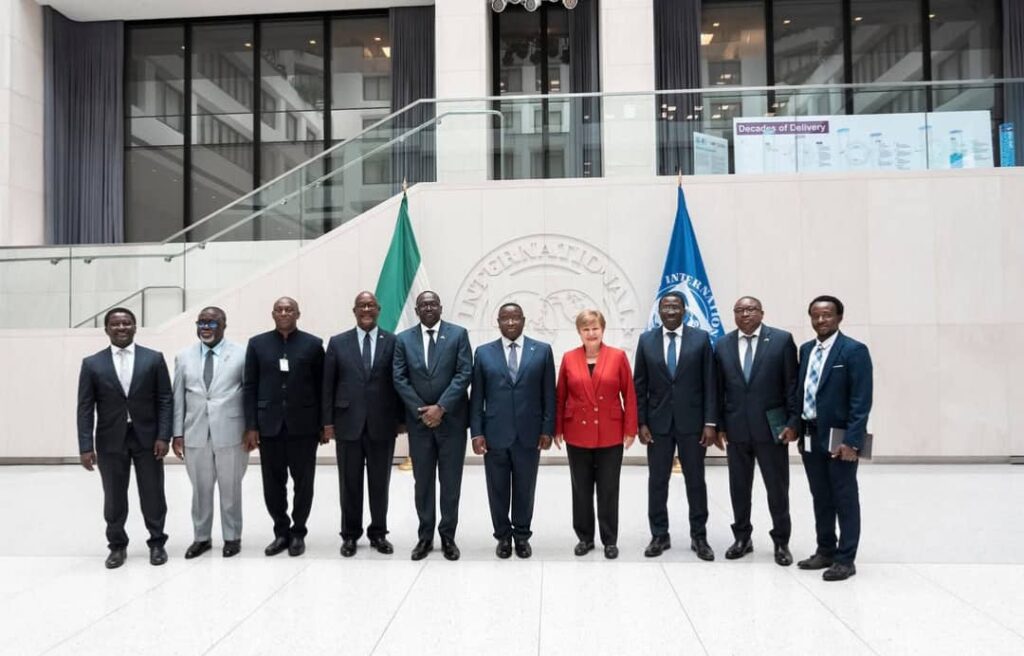
Now, the International Monetary Fund (IMF) has reached a staff-level agreement with the government on the First and Second Reviews of the Extended Credit Facility (ECF) programme. This means Sierra Leone will be disbursed with US$78.8 million in financial support to strengthen macroeconomic stability, advance reforms, and reinforce economic resilience. For the Sierra Leone Government, this accomplishment comes as a result of IMF’s confidence in President Bio’s government for its visible progress due to structural transformation, fiscal prudence, strengthened public financial management, improved revenue mobilization, and long-term economic sustainability.
Be it as it may, Sierra Leone has had an ugly history of its authorities receiving billions in aid, yet they have failed to deliver basic services for the people, who still confront with lack of clean drinking water, reliable electricity, properly funded health care, adequate educational infrastructure, and food security. This persistent stagnation despite inflows of assistance makes it hurting about governance, oversight, and the true impact of foreign aid.
Another $78.8 ECF is making headlines. But the question has not always been the amount of money received, how it is managed to translate into prosperity is. The public discontent always remains not on the receipt of external assistance, but more on how it’s being misused or misdirected for self-aggrandizement.
However, even if inflow of financial assistance was judiciously utilized, the depth of deficit in infrastructure, human capital, and institutional strength is so great that no amount of aid alone can fully bridge the country’s socioeconomic development gaps.
This US$78.8 million disbursement promises the channelling of resources into priority sectors—building fiscal buffers, and implementing reforms that bolster long-term growth, and envisaged to contribute to the enhancement of economic stability, support social programmes, improve public sector efficiency, and ensures the gains are felt by the wider citizenry. Yet, the question isn’t whether the funds will come; it’s whether they will reach the right channels, be spent wisely, and deliver results—or whether ECF $78.8 million would become simply another assistance mirage. Sierra Leone has not had any shortage of sympathy or external support, and it, therefore, deserves more than just repeated announcements of financial aid without results.