
DOMESTIC LION, BORDER LAMB
…ECOWAS CHAIRMAN HUMILIATED
By Ibrahim Alusine Kamara (Kamalo)
Tensions along Sierra Leone’s border with the Republic of Guinea have flared yet again, following reports that Guinean soldiers crossed into Sierra Leonean territory, captured personnel of the Republic of Sierra Leone Armed Forces (RSLAF) and officers of the Sierra Leone Police’s Operational Support Division (OSD), and detained them.
The incident, described by critics as a troubling act of external aggression and an affront to national sovereignty, reportedly occurred on Monday, 23 February 2026, in Kaliyereh village, Falaba District.
According to reports from the area, the confrontation followed allegations of fresh border violations by Guinean troops. What has unsettled many Sierra Leoneans, however, is not merely the incursion itself, but the apparent ease with which foreign soldiers advanced, disarmed, and detained Sierra Leonean security personnel, despite the absence of any declared war between the two states and notwithstanding established international conventions governing cross-border conduct.
This episode comes on the heels of the long-running Yenga dispute in Kailahun District, where Guinean forces have maintained a controversial presence for years. Despite repeated bilateral engagements affirming Sierra Leone’s ownership of Yenga, the matter remains unresolved in practice. For many citizens, the recurrence of incidents from Yenga to Falaba suggests a pattern rather than coincidence.
It is within this context that suspicions are hardening among sections of the public. Some believe Guinea’s posture reflects a strategic calculation to entrench itself in sensitive border communities. Whether or not that interpretation withstands diplomatic scrutiny, the perception itself is politically combustible.
At home, critics are directing their frustration squarely at President Julius Maada Bio, a retired brigadier general and Commander-in-Chief of the Armed Forces. They argue that his administration’s response has been muted at a moment demanding visible resolve. “Yesterday it was Yenga,” some say, “today it is Yenga and Falaba—tomorrow, who knows?”
The Falaba incident is being framed by observers not merely as a border misunderstanding, but as a stark reminder of Sierra Leone’s strategic vulnerability. The critics draw a sharp contrast whereas domestically, the authorities have demonstrated speed and firmness in confronting opposition politicians, activists, and perceived dissenters, often charged with incitement or subversion.
Security operations within national borders have been decisive and highly visible. Yet when confronted with repeated external incursions, culminating now in the reported detention of Sierra Leonean personnel by a foreign military, critics contend that the government’s posture appears restrained to the point of opacity. There have been no dramatic diplomatic escalations made public, no high-profile ultimatums, and limited official briefings outlining retaliatory or preventive measures. For many citizens, this asymmetry raises uncomfortable questions about priorities.
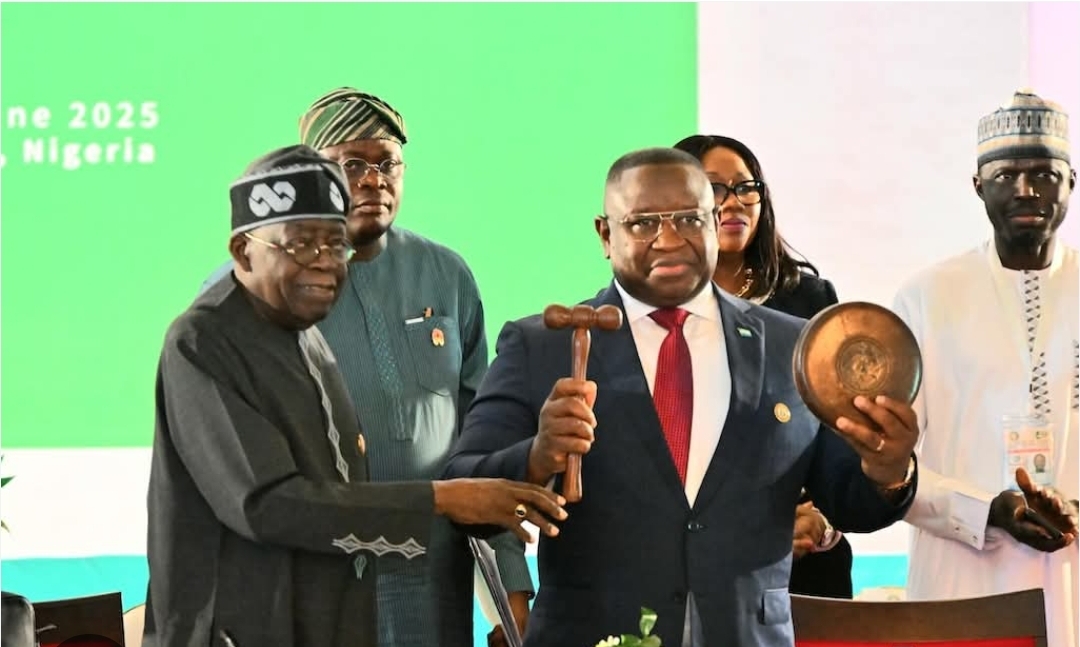
President Bio’s prominent standing within the Economic Community of West African States (ECOWAS) further sharpens the optics. ECOWAS is mandated to uphold regional stability and the sovereignty of member states. Analysts note that leadership within such a body carries not only prestige, but expectations, particularly when issues of territorial integrity arise at home.
To be clear, the government’s stated position has consistently favored diplomacy. Officials maintain that sustained dialogue prevents escalation, protects civilian populations along the border, and preserves regional harmony. In a volatile West African sub-region, restraint is often framed as prudence rather than weakness.
But diplomacy, critics counter, must yield tangible outcomes. Sovereignty is not theoretical; it is territorial. The protection of national borders and the security personnel sworn to defend them is a constitutional obligation, not a discretionary policy choice. If diplomatic engagements do not deter further incursions, they argue, then the strategy itself must be reassessed.
As of press time, comprehensive public briefings detailing concrete steps to secure the release of detained personnel, prevent recurrence, or reinforce border security have remained limited. And in the absence of clear communication, speculation fills the vacuum.
What is unfolding is therefore more than a border dispute. It is a test of state capacity, strategic clarity, and political will. The government must balance firmness with restraint, resolve with responsibility. But one principle that stands beyond negotiation is the territorial integrity of Sierra Leone which is not a matter for gradual erosion.
The Falaba incident has transformed simmering anxiety into urgent debate. Whether it becomes a turning point, or merely another entry in the long ledger of unresolved border tensions, will depend on what happens next.