
MAMBU’S LOOSE-CANNON POLITICS ENDANGERS SLPP!
By Ibrahim Alusine Kamara (Kamalo)
The conduct and public utterances of Sierra Leone People’s Party (SLPP) National Publicity Secretary, Moses Sellu Mambu, are increasingly becoming a political liability for the governing party, raising questions over whether its chief spokesman is creating unnecessary enemies at a time when the SLPP should be consolidating support, managing internal differences and preparing for a difficult political transition.
From his controversial suggestion that Sierra Leone’s next elections could be held in “2028 or 2030,” to his combative posture in the dispute involving Hon. Alhaji Musa Tarawally, and now an allegation that he threatened veteran journalist Thomas Josephus Dixon, Mambu has repeatedly found himself at the centre of controversies that threaten to distract from the SLPP’s broader political agenda.
For a governing party approaching a crucial succession period, the pattern presents a serious political question: How many battles can the SLPP afford to fight at the same time, and how many enemies does it need to create?
The controversy surrounding Mambu intensified in August when, while discussing the SLPP’s future flagbearer and preparations for the next elections, he referred to the party positioning itself to win the “2028 or 2030 elections.” The statement immediately triggered concerns because Sierra Leone’s next general elections are expected in 2028.
Mambu later sought to play down the controversy, describing his reference to 2030 as having been made “out of fun” and characterising the debate as “political basketball.” He also expressed his personal view that Sierra Leone could consider extending the presidential term from five to seven years because of the cost associated with elections.
But the political damage had already been done.
Coming from the National Publicity Secretary of the governing party, such statements cannot easily be treated like ordinary political banter. Every pronouncement from the SLPP’s official spokesman carries the weight of his office and is inevitably scrutinised for indications of the party’s thinking.
Indeed, SLPP National Chairman Jimmy Batilo Songa subsequently publicly confirmed 2028 as the election year, effectively distancing the party’s official position from speculation surrounding 2030.
As the controversy over the election timetable began to subside, Mambu became deeply embroiled in another confrontation—this time involving former minister and SLPP flagbearer hopeful Hon. Alhaji Musa Tarawally.
The dispute over Tarawally’s membership and eligibility within the SLPP escalated beyond an internal party disagreement into public notices, legal threats and eventually the involvement of the Criminal Investigations Department.
Mambu publicly disclosed that matters involving Tarawally had been taken to the CID, saying investigators were examining statements and that efforts were being made to obtain a warrant from a magistrate.
That followed an SLPP public notice warning party officials, supporters, businesses, organisations and members of the public against conducting political or business dealings with Tarawally under the authority of the party.
Tarawally’s lawyers responded with a seven-day ultimatum demanding a retraction, describing the notice as defamatory, beyond Mambu’s authority and contrary to the SLPP Constitution.
Whatever the eventual determination of Tarawally’s membership status, the manner in which the disagreement has unfolded risks transforming what could have been handled through established internal party mechanisms into another highly public political confrontation.
For a party preparing to choose a successor to President Julius Maada Bio, alienating aspirants, their supporters or important political constituencies could prove costly. Internal contests inevitably produce disagreements, but the responsibility of party leadership is generally to manage those disagreements without turning every difference into open warfare.
The latest controversy involving journalist Thomas Josephus Dixon is potentially even more serious.
The Sierra Leone Association of Journalists (SLAJ) on October 6 condemned an alleged death threat reportedly made against Dixon, Chairman of the Guild of Newspaper Editors and Managing Editor of the New Age Newspaper, following an AYV television programme on September 27.
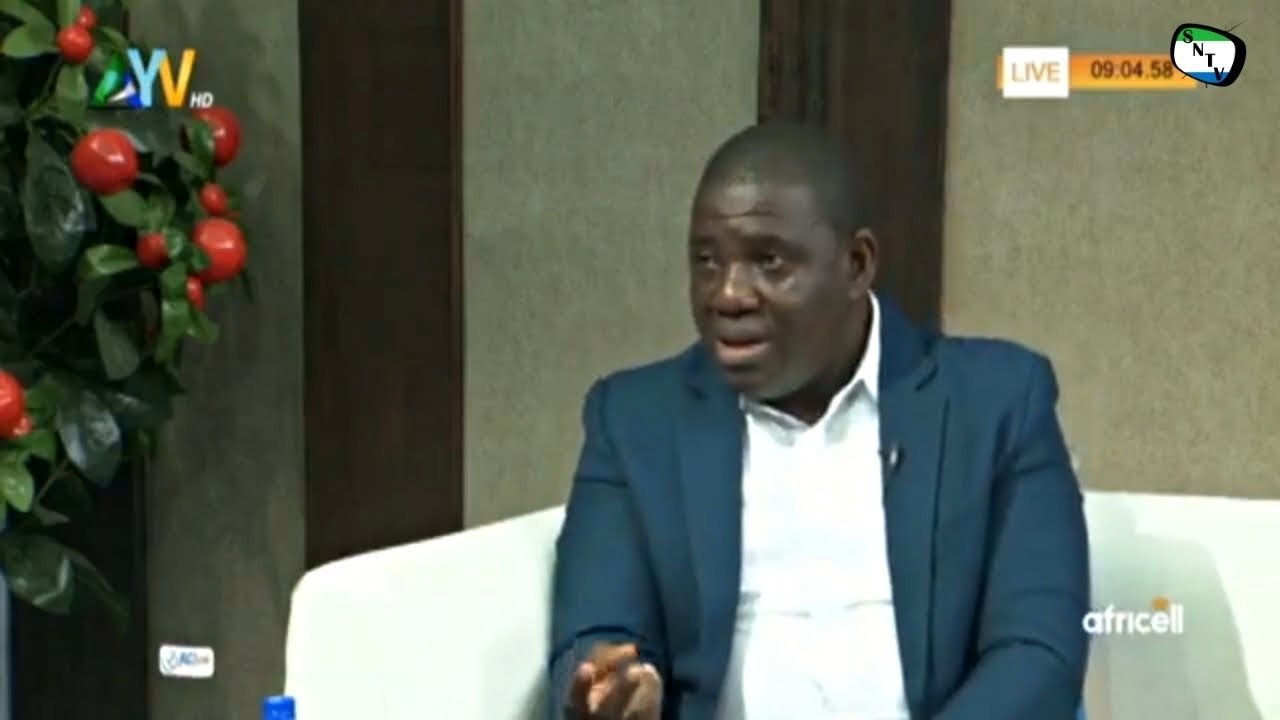
According to SLAJ, Dixon formally complained that Mambu approached him after the programme and allegedly told him: “We will hit you hard!” before making a reference to Dixon’s late colleague, journalist Ibrahim Samura. SLAJ said AYV presenter Victor Jones provided a formal eyewitness account corroborating Dixon’s allegation.
Mambu has denied threatening Dixon. According to SLAJ, he maintained that he merely cautioned the journalist to be careful after the television programme. SLAJ has consequently called on the Sierra Leone Police to urgently and impartially investigate the matter and establish what actually happened.
Nevertheless, the episode represents yet another damaging controversy surrounding the SLPP’s principal public communicator.
The confrontation reportedly followed a heated exchange between Dixon and Mambu on AYV over the leadership and internal management of the SLPP, during which Dixon criticised elements within the party executive and Mambu strongly defended the leadership.
Political parties need strong spokespersons. They need officials capable of defending their policies, challenging misinformation and confronting political opponents when necessary. But effective political communication also requires restraint, diplomacy and an understanding that not every criticism demands confrontation.
The job of a publicity secretary is not simply to fight political battles. It is also to win confidence, manage perceptions, calm tensions and build bridges—even with critics.
Mambu’s increasingly confrontational public profile therefore presents the SLPP with a dilemma.
At a time when the party must manage an approaching flagbearer contest, maintain unity among competing political interests, defend its record in government and prepare for the next general elections, unnecessary confrontations could create enemies the party does not need.
The “2028 or 2030” controversy created suspicion among political opponents and sections of the public. The Musa Tarawally affair has deepened an already sensitive internal party dispute. The Thomas Dixon allegation has now drawn the country’s main journalists’ association into the controversy and raised serious questions about relations between the governing party’s spokesman and the media.
Taken individually, each controversy may be explained away as an isolated political disagreement. Taken together, however, they point to a communication problem the SLPP leadership may no longer be able to ignore.
Politics is ultimately a game of numbers. Elections are won by attracting supporters, retaining allies and persuading undecided citizens—not by multiplying adversaries.
President Bio and the SLPP leadership therefore face an important question: Is Moses Mambu’s combative style strengthening the party—or steadily creating political enemies the SLPP can ill afford as 2028 approaches?
For a party seeking continuity in power beyond President Bio’s tenure, the answer could prove consequential.