
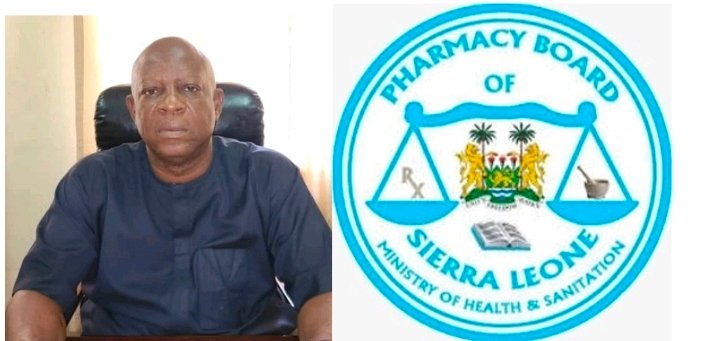
‘’KILLER’ MEDICINES PROLIFERATE!
…PHARMACY BOARD COMPLICIT
By Ibrahim Alusine Kamara (Kamalo)
As concerns mount over the importation, distribution and sale of counterfeit, substandard and unregistered medicines in Sierra Leone, serious questions are now shifting beyond pharmaceutical importers and pharmacies to the very institution mandated to protect the public from dangerous medicines — the Pharmacy Board of Sierra Leone (PBSL).
At the centre of the controversy is a fundamental question demanding an answer: How are counterfeit, substandard or unauthorised medicines finding their way into Sierra Leone’s pharmaceutical supply chain despite the existence of a regulator specifically mandated to prevent this from happening?
Investigations by Salone Compass Newspaper have been examining complaints and concerns surrounding medicines circulating on the local market, as well as the regulatory processes governing their importation, clearance, distribution and sale.
The investigation comes against the backdrop of increased scrutiny of the pharmaceutical sector, with People’s Pharmacy, Mark Pharmacy, Hamdalaye Pharmacy and Leigh Pharmaceuticals among businesses that have recently faced questions relating to regulatory compliance, importation and the quality of pharmaceutical products entering the market.
Salone Compass understands that the Parliamentary Committee on Health and the Pharmacy Board have intensified scrutiny of pharmaceutical businesses as authorities move against unauthorised imports and other alleged regulatory breaches.
But while attention is being directed at importers, distributors and pharmacies, the bigger question remains: where was the regulator?
According to the Pharmacy Board’s own published mandate, its Factory Inspectorate and Import Control Department is responsible for regulating and monitoring the manufacture, importation, distribution and storage of pharmaceutical products in Sierra Leone.
Its responsibilities include processing and approving import permits, inspecting imported containers and cargo at ports of entry, conducting post-market surveillance, collecting samples for laboratory analysis, quarantining suspicious or non-compliant products and conducting investigative inspections into reported violations.
The same department says its objective is to ensure pharmaceutical products entering Sierra Leone meet the required standards of quality, safety and efficacy.
This makes the reported presence of counterfeit, substandard, unregistered or illegally imported medicines on the Sierra Leonean market even more troubling.
If the Pharmacy Board controls pharmaceutical import permits and clearance processes, who authorised the questioned consignments?
If particular medicines entered without the required permits or registrations, how did they penetrate the country’s distribution network?
Were inspections conducted at the ports of entry?
Were samples taken and subjected to the necessary quality-control procedures?
Were the medicines properly registered before being distributed?
And if regulatory breaches were discovered, what enforcement actions were taken against the businesses or individuals responsible?
These are among the questions Salone Compass Newspaper believes must be answered as the controversy surrounding the country’s pharmaceutical supply chain deepens.
The Pharmacy Board itself acknowledges the magnitude of the threat.
In June 2026, authorities intercepted more than 1,000 cartons of Amoxicillin 500mg capsules at the Queen Elizabeth II Quay. The Pharmacy Board reportedly confirmed that the product had no registration, marketing authorisation or import permit in Sierra Leone and warned that its safety and efficacy could therefore not be guaranteed.
The Board has also destroyed counterfeit, expired, substandard and illegally imported pharmaceutical products confiscated through enforcement operations.
These interventions demonstrate that the regulator is taking enforcement action. But they simultaneously raise another uncomfortable question: how much escapes interception and eventually reaches patients?
The issue becomes even more significant considering that the Pharmacy Board’s Enforcement and Narcotics Control Department expressly lists among its functions the prevention and prohibition of the importation, manufacture, distribution, dispensing and sale of counterfeit, adulterated, banned, substandard and expired medicines.
Sierra Leone’s National Medicines Policy similarly requires medicines produced, procured, distributed or marketed in the country to satisfy quality, efficacy and safety requirements and provides for periodic sampling of products circulating within the pharmaceutical supply chain.
Against this regulatory framework, the reported breaches within the pharmaceutical sector demand more than raids and seizures. They require a comprehensive examination of the entire chain — from the overseas manufacturer and local importer to import permits, port clearance, warehouses, distributors, pharmacies and ultimately the patient.
Of particular interest to this investigation are People’s Pharmacy, Mark Pharmacy, Hamdalaye Pharmacy and Leigh Pharmaceuticals, whose regulatory status and compliance records are now coming under scrutiny.
Salone Compass Newspaper is investigating questions surrounding pharmaceutical import licences and permits, product registration, regulatory clearance, distribution and the quality of medicines associated with businesses operating within the sector.
However, this newspaper emphasises that regulatory scrutiny or allegations of breaches do not, by themselves, establish that any particular company knowingly imported or sold counterfeit or substandard medicines. The investigation will seek documentary evidence and responses from the businesses and relevant authorities before reaching conclusions on individual cases.
The Pharmacy Board cannot be treated merely as an observer in a crisis involving medicines it is legally mandated to regulate.
If importers circumvented the country’s pharmaceutical regulations, the public deserves to know how they did so.
If permits were improperly obtained, the public deserves to know who approved them.
If medicines were cleared without satisfying regulatory requirements, Sierra Leoneans deserve to know where the system failed.
And if officials knowingly facilitated breaches of pharmaceutical regulations, that would raise an entirely different and much more serious question of accountability.
Significantly, the Anti-Corruption Commission engaged Pharmacy Board staff in August 2026 on corruption-prevention safeguards and integrity in pharmaceutical regulation. During that engagement, the ACC cautioned personnel against exploiting operational challenges and institutional gaps to engage in corrupt practices.
That intervention does not establish wrongdoing by Pharmacy Board officials. But against the wider questions confronting pharmaceutical regulation, it underscores why transparency and strong safeguards within the institution are indispensable.
For ordinary Sierra Leoneans, this is not merely an argument about licences, permits and bureaucratic procedures.
It is potentially a matter of life and death.
People enter pharmacies believing that medicines sold across the counter have passed through a regulatory system designed to protect them. A patient purchasing antibiotics, antimalarials, painkillers or other medicines ordinarily has neither the equipment nor expertise to determine whether the product contains the correct active ingredient, has been properly manufactured or was transported and stored under appropriate conditions.
That responsibility rests heavily on regulators and licensed participants throughout the pharmaceutical supply chain.
The Pharmacy Board must therefore demonstrate not merely that it conducts seizures and enforcement operations, but that the country’s regulatory architecture is capable of stopping unsafe medicines before they reach patients.
As Parliament and regulators intensify their crackdown, Salone Compass Newspaper will continue following the documentary trail to establish how medicines enter Sierra Leone, who imports them, who clears them, how they are registered and tested, and who ultimately authorises their distribution.
The questions surrounding the Pharmacy Board are therefore only the beginning.
In Part Two, Salone Compass Newspaper turns the spotlight directly on People’s Pharmacy, Mark Pharmacy, Hamdalaye Pharmacy and Leigh Pharmaceuticals, examining the specific compliance questions surrounding their importation and distribution activities — and asking what the regulatory records actually reveal.