
WAR ON DISSENT
…APC Scribe Jailed
By Ibrahim Alusine Kamara (Kamalo)
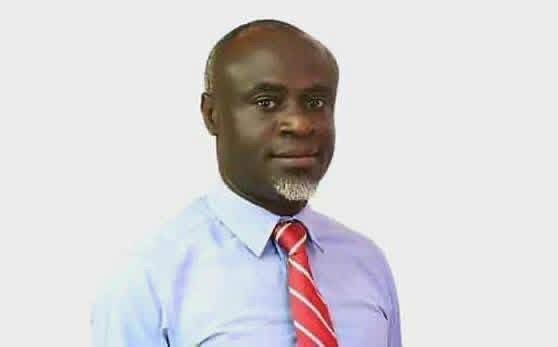
Sierra Leone’s political atmosphere thickened on Thursday afternoon, 12 February 2026, when news broke that Lansana Dumbuya Esq., National Secretary General of the main opposition All Peoples’ Congress (APC), had been charged with incitement, insulting conduct, and public insult against the President.
Within hours, the development ricocheted across party lines, social media platforms, and community discussions. For APC stalwarts, members, supporters and sympathisers, the charges signaled yet another flashpoint in an already tense political climate.
Dumbuya appeared before Pademba Road Magistrate Court No. 1 in Freetown the same day the charges were filed. Bail was denied. He was remanded at the Pademba Road Male Correctional Centre until Monday, 16 February 2026, when the matter is scheduled to resume.
At the heart of the case is a remark allegedly made by Dumbuya during the APC’s widely attended meeting at the Attouga Mini Stadium in Cline Town. At that gathering described by the party executive as “mammoth meeting”, Dumbuya reportedly referred to President Julius Maada Bio as an “electoral thief.”
The Political Parties Regulation Commission (PPRC) moved swiftly. It imposed a fine of NLe 200,000 for Dumbuya’s statement and an additional NLe 150,000 for comments attributed to another party member, bringing the total penalty to NLe 350,000. The Commission subsequently suspended the APC for delayed payment of the fine. The party settled the amount on Wednesday, 11 February 2026. That same day, criminal charges were formally instituted against Dumbuya.
The sequence of events has ignited debate across the country. For many observers, the central question is not whether political speech should have limits, but whether administrative sanctions and criminal prosecution for the same utterance amount to double punishment.
Legal minds are divided. Some argue that the PPRC’s fine is regulatory in nature, an administrative enforcement of party conduct rules, while criminal charges fall within the purview of state law and therefore constitute separate processes. Others contend that in spirit, if not strictly in law, punishing the same act twice risks undermining public confidence in fairness and proportionality.
Beyond the legal technicalities lies a deeper political anxiety.
Critics of the Bio-led SLPP administration describe the move as emblematic of a broader pattern, one they say signals shrinking democratic space, intolerance of dissent, and the increasing criminalisation of political rhetoric. They argue that in a country that endured civil war and struggled for democratic consolidation, caution and restraint should guide the state’s response to opposition speech, however provocative.
Supporters of the government counter that no democracy can thrive where inflammatory language is normalised. They insist that branding a sitting president an “electoral thief” is not mere opinion, but a serious allegation capable of inciting unrest, eroding institutional trust, and destabilising public order. In their view, the law must apply equally, regardless of political stature.
Between these positions stands a public weary of political brinkmanship.
The denial of bail has particularly stirred emotions. In Sierra Leone’s legal tradition, bail is often granted in cases not involving capital offences. For opposition supporters, the remand raises suspicions of selective severity. For government defenders, it reflects judicial discretion based on the charges and surrounding circumstances.
What cannot be denied is the symbolism of Pademba Road. The image of a senior opposition figure being held behind its walls carries weight. It sharpens perceptions. It hardens narratives.
As the matter returns to court on 16 February, the proceedings will be closely watched, not only by party loyalists, but by civil society, legal analysts, and international observers attentive to the health of Sierra Leone’s democracy.
This case now transcends a single remark at a political rally. It tests the delicate balance between free expression and public order, between accountability and political rivalry, between the rule of law and the perception of its use as a political instrument.
Sierra Leone’s democratic journey has never been smooth. It has been paid for in blood, sacrifice, and persistent civic struggle. That history casts a long shadow over present events.
Whether this episode becomes a footnote in routine political contestation or a defining chapter in the country’s democratic trajectory will depend not only on the courts, but on the conduct, restraint, and wisdom of all actors involved.
In moments like these, nations are not merely governed by laws, but are measured by how those laws are applied.