
FOR ROGUE CHINESE COMPANY…
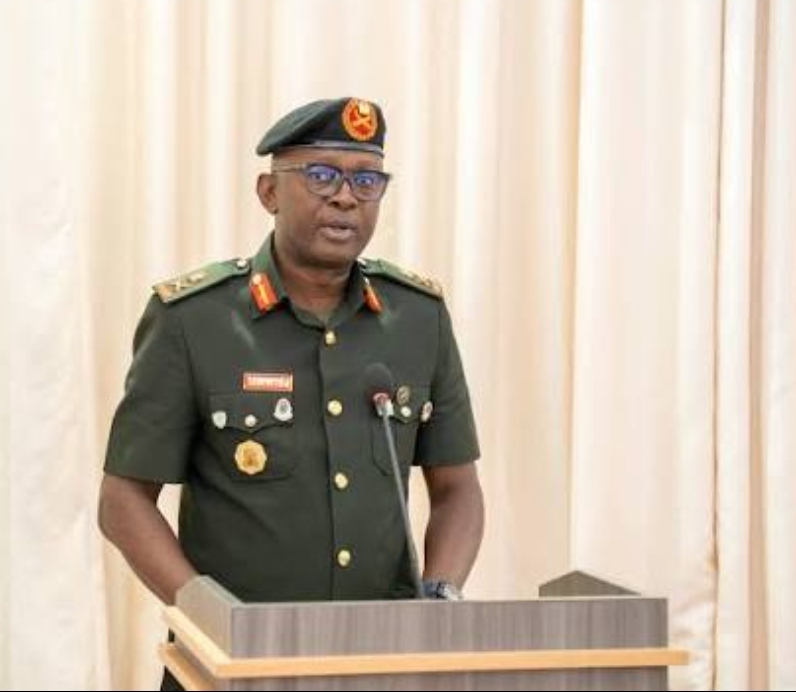
RSLAF TURNS GUNS ON CIVILIANS
By Ibrahim Alusine Kamara (Kamalo)
The Republic of Sierra Leone Armed Forces (RSLAF) appears to be drifting dangerously away from its constitutional mandate to defend the nation and protect its citizens. Instead of serving as a shield for the people, sections of the military now appear increasingly repurposed as armed enforcers for rogue foreign corporations accused of systematically exploiting Sierra Leone’s economy.
The most chilling manifestation of this abuse of power is the recent shooting of two unarmed civilians—a commercial driver and his apprentice—by a soldier stationed at the Songo Toll Gate in Makoloh. What should have been a routine traffic issue escalated into a fatal encounter, exposing once again the deadly consequences of militarization, impunity, and the corporate capture of state security institutions.
Eyewitnesses told Salone Compass that the incident occurred after the driver, Daniel Sesay, bypassed the toll gate and used an alternative route repaired by local community members. That decision, witnesses say, enraged the soldier on duty, who opened fire on the vehicle. Both Sesay and his apprentice were shot. The apprentice later succumbed to his injuries and died yesterday morning.
This was not an act of self-defense or a response to any threat.
It was the lethal use of state power to protect a toll system operated by a foreign company—at the direct expense of Sierra Leonean lives.
The toll gate is operated under a controversial Build-Operate-Transfer (BOT) agreement between the Government of Sierra Leone and the China Railway Seventh Group (CRSG), which grants the company a 25-year concession over the Wellington–Masiaka Highway, a four-lane road reportedly costing about US$148 million. Under the agreement, CRSG is obligated to maintain the highway, construct and keep motorable alternative routes, and support host communities affected by its operations.
Yet recent findings from the Insntitute of Governance Reform (IGR) report paint a damning picture of CRSG’s operations. The report raises serious concerns of absolute rip off by the Chinese Company, under-declaration, and exploitative toll practices that have reportedly deprived Sierra Leone of millions of dollars in expected public revenue. The findings reinforce long-standing public complaints that the toll regime is less about infrastructure recovery and more about aggressive profit extraction—at national cost.
Despite these revelations, enforcement has intensified—not through regulatory oversight, but through intimidation.
Instead of honoring its contractual obligations, CRSG has not only allowed alternative routes to deteriorate but actively obstruct their use, forcing motorists into toll dependence. Even more disturbing are persistent reports of harassment and intimidation of drivers who attempt to bypass toll gates, with police and military personnel either standing by or actively participating.
The deployment of armed soldiers to enforce a private company’s toll system is an outrageous abuse of state power. Public security institutions—funded by struggling taxpayers—are being weaponized to safeguard foreign corporate profits, while ordinary Sierra Leoneans are brutalized for seeking affordable access through roads that pass through their own communities.
In the aftermath of the Makoloh shooting, the Local Unit Commander (LUC), John B. Koroma, confirmed that police officers have been actively stopping residents from repairing or using alternative routes. He offered no legal justification and declined further comment. His admission alone raises troubling questions about police complicity in denying citizens lawful alternatives and facilitating corporate exploitation.
The military, on the other hand, refused to comment when contacted.
The Chinese company, as always, declined to respond.
This silence is not accidental—it is instructive.
The tragedy also unfolds against a broader and deeply worrying backdrop: a growing breakdown of discipline within the RSLAF itself. In recent months, the nation has witnessed alarming incidents in which junior officers have allegedly shot and killed their senior commanders—acts that point to a collapse of command authority, morale, and professional military conduct. These internal fractures raise grave concerns about training, accountability, and the politicization of force within the ranks.
A military struggling to control itself cannot be trusted to police civilians—especially when deployed to protect corporate interests.
A young Sierra Leonean is dead and another lies wounded yet, there has been no swift accountability, no public explanation, and no visible remorse from the institutions constitutionally mandated to protect life.
Instead, there is a wall of silence.
So, the question that now confronts the nation is:
When did Sierra Leone’s guns stop protecting Sierra Leoneans and start protecting foreign profits?
Until this question is answered—and until those responsible, both in uniform and in boardrooms, are held fully accountable—the uniform that should symbolize national protection will continue to inspire fear, anger, and distrust among the very people it is sworn to defend.