
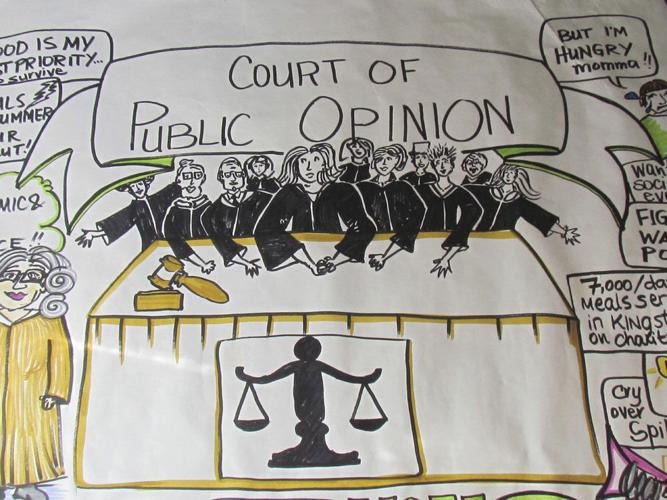
By Kamalo
THE PEOPLE VS SHRINKING DEMOCRATIC SPACE.
Charge before the court:
That the democratic freedoms guaranteed by the Constitution of Sierra Leone are being selectively applied, unevenly enforced, and increasingly weaponized against dissent.
The Prosecution (The Public Conscience):
Citizens watching from the sidelines argue that democracy cannot survive on double standards. They point to a clear contrast between yesterday and today—when harsh criticism of a sitting president was tolerated in opposition but is now punished in power. To many, the arrest and detention of an opposition party’s senior official for political speech signals not the defense of public order, but the criminalisation of dissent.In the public mind, words, however unpleasant, are not crimes. Elections are contested terrain, and allegations of dishonesty, rigging, or misgovernance are part of the rough-and-tumble of politics. When institutions react with fines, police invitations, and detention, the public begins to suspect that the real offense is not disorder, but disobedience of narrative.
The Defence (The State and Its Institutions):
Supporters of the government insist that no one is above the law and that reckless language by political actors can inflame tensions in a fragile democracy.They argue that the state has a duty to prevent hate speech, maintain peace, and discourage rhetoric that could destabilised the nation. In their view, regulation is not repression, but responsibility. Yet even within this defense, cracks appear. The public asks: Why does enforcement feel so selective? Why do some voices face consequences while others enjoy impunity? Silence in the face of similar conduct from ruling party figures weakens the credibility of this argument.
The Evidence (Public Memory):
The court recalls a time when insults, allegations, and provocative language flowed freely across party lines without arrests or detention. The public remembers opposition rallies that were loud, raw, and sometimes crude—yet protected. This memory now stands in stark contrast to present realities, where police cells appear closer to political microphones than before.The Expert Witnesses (Civil Society & Legal Minds):Lawyers, academics, journalists, and human rights advocates testify that political speech, especially on elections and governance, deserves the highest level of protection. They warn that the use of detention chills free expression and sets a dangerous precedent: today’s opposition leader could be tomorrow’s prisoner, regardless of party colour.They remind the court that peace built on fear is temporary, and order enforced through silence is brittle.
The Jury (The Ordinary Citizen):
Market women, bike riders, students, traders, and professionals deliver a quiet but firm verdict: let everyone talk. To them, democracy means enduring uncomfortable speech, not jailing it. They fear that if powerful political figures can be detained for words, ordinary citizens stand even less protection.
The Verdict (Public Judgment):
In the court of public opinion, the independent institutions are found guilty of democratic inconsistency. The punishment, however, is not imprisonment—but eroding trust, deepening cynicism, and a growing belief that institutions answer more to power than to principle.
The Sentence (A Warning):
This court issues a cautionary ruling: A democracy that punishes speech today will struggle to command legitimacy tomorrow. If dissent is policed rather than persuaded, the very foundations of constitutional rule will weaken.
Closing Remark from the Bench: Power is temporary. Institutions endure. And history is an unforgiving judge.