
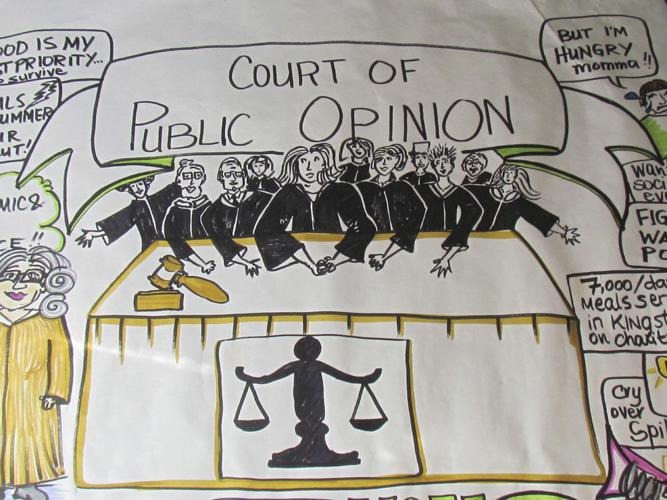
My Lords, My Ladies,This matter before the court is not merely political; it is constitutional at its core. The issue is whether the proposed amendments to the 1991 Constitution conform to the fundamental principles of democracy, separation of powers, and electoral fairness.We submit that several provisions of the 2025 Constitution Amendment Bill fail that test. First, Clause 42(2)(e) introduces a presidential victory threshold that subordinates the popular will to geographic arithmetic. A candidate may win the majority of votes cast nationwide and still be denied office. This violates the democratic principle that sovereignty resides in the people collectively, not in district quotas. Comparative constitutional jurisprudence shows that where geographic thresholds exist, they are carefully balanced and justified. In this case, no such justification has been demonstrated.Second, the proposed amendments to the Proportional Representation system remove constitutional certainty and replace it with legislative discretion. By deleting Section 38A and deferring operational safeguards to Parliament, the Constitution abdicates its duty to protect electoral fairness. This court has consistently held that electoral rules must be predictable, entrenched, and insulated from partisan manipulation. These amendments do the opposite.Third—and most critically—Section 32 undermines the independence of the Electoral Commission for Sierra Leone. While the creation of a Search and Nomination Committee appears neutral on its face, Clause 32(3) vests appointment power squarely in the President. This creates a clear conflict of interest. One cannot be both a contestant in an election and the ultimate source of authority over the appointment of the electoral umpire.Independence is not a matter of appearance; it is a constitutional necessity.When these provisions are examined collectively, a pattern emerges: executive dominance over elections, Parliament, and oversight institutions. This violates the doctrine of separation of powers and offends the basic structure of constitutional democracy.We therefore submit that the 2025 Constitution Amendment Bill, in its current form, is inconsistent with democratic norms, comparative constitutional standards, and the spirit of the 1991 Constitution. It ought not to be enacted without substantial revision, broad public consultation, and safeguards that restore balance, transparency, and trust.Justice demands no less.