
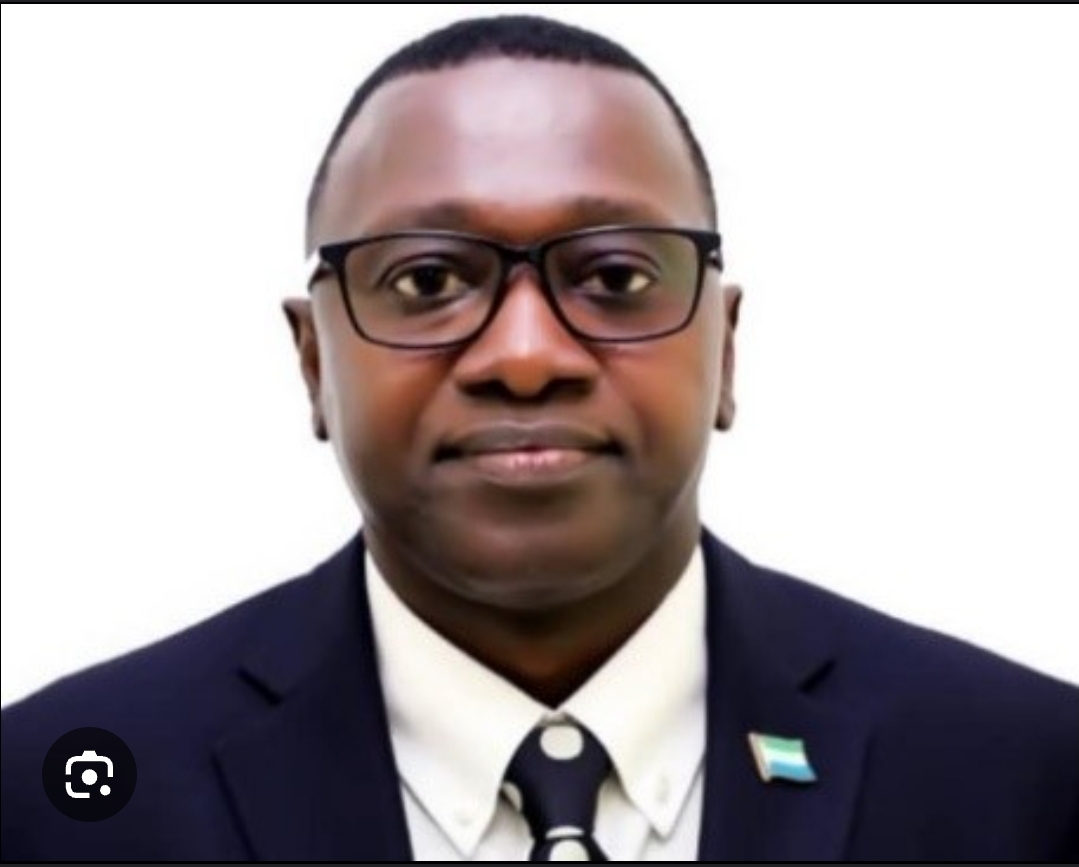
PRESSURE MOUNTS ON ‘ROGUE’ FINANCE MINISTER
Pressure on the Minister of Finance has intensified following President Julius Maada Bio’s termination of the Mineral Wealth Fund Sierra Leone Limited (MWFSL), with civil society groups, governance analysts, and legal observers now openly calling on the Anti-Corruption Commission (ACC) to investigate whether the President was deliberately misled on a matter involving Sierra Leone’s finite mineral resources.
The President’s decision to dismantle the MWFSL and unwind all related agreements has been widely interpreted as an extraordinary institutional rebuke. Critics argue that such a drastic intervention raises red flags serious enough to warrant a formal ACC inquiry into how the fictitious arrangement was conceived, approved, and presented to the Head of State.
“The issue goes beyond policy failure,” said a legal analyst in Freetown. “If the President was induced to approve a structure that lacked legal grounding, transparency, and public financial safeguards, then that crosses into potential abuse of office and deception. That is squarely within the ACC’s mandate.”
State House has already moved to contain the damage—terminating management service agreements, cancelling engagements linked to China Overseas Engineering Company (COVEC), and shifting oversight of the Tonkolili North Iron Ore project away from the Ministry of Finance. But critics insist that structural correction without personal accountability risks entrenching a culture of impunity.
Attention has now turned to the Finance Minister’s role in promoting the Mineral Wealth Fund as a credible national vehicle. For months, the fund was presented as a strategic instrument to secure mineral revenues for future generations. The subsequent decision to scrap it entirely—and replace it with a properly legislated Sierra Leone Sovereign Wealth Fund (SLSWF)—suggests that the original advice given to the President was either grossly incompetent or intentionally misleading.
Either scenario, observers argue, demands investigation.
The controversy has also reignited scrutiny of the Minister’s past entanglements, including the unresolved Kasafoni Land saga and the Mount View Company affair. Civil society organisations note a recurring pattern of opaque arrangements that repeatedly force presidential intervention, warning that the Mineral Wealth Fund collapse may represent the most consequential example yet.
Transparency advocates say the ACC must now examine whether there were undisclosed interests, improper inducements, or breaches of procurement and financial management laws linked to the MWFSL framework. “This is not about witch-hunting,” said one activist. “It is about restoring confidence in governance. When national assets are placed at risk, silence is not an option.”
Within political circles, there is growing concern that failure to act could weaken Sierra Leone’s reform credentials with development partners and investors. Abrupt policy reversals, unaccompanied by investigations, risk signaling tolerance for elite misconduct rather than a commitment to accountability.
Communities around Tonkolili North, meanwhile, remain wary. For them, the collapse of yet another mineral governance model reinforces long-held fears that elite decisions are made without transparency, while consequences rarely reach the top.
President Bio’s decision to kill the Mineral Wealth Fund has been welcomed as necessary. But as calls for an ACC probe grow louder, the spotlight is shifting from policy repair to personal responsibility.
The fund is gone.
The damage is acknowledged.
And the nation now waits to see whether the fight against corruption will stop at dismantling a bad structure—or finally confront those who sold it to the President.